








What is the story about?
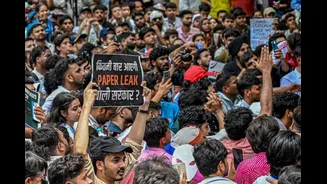
The National Students' Union of India (NSUI) organised a large protest march in Karnataka on June 6, bringing together thousands of students and party
activists to demand accountability over the alleged NEET paper leak controversy and concerns surrounding the CBSE's OSM Evaluation System. Sharing details of the demonstration on social media platform X, NSUI National President Vinod Jakhar said Union Education Minister Dharmendra Pradhan should resign, alleging that the future of students had been compromised. "Dharmendra Pradhan will have to resign; tampering with the future of students will not be tolerated," Jakhar said.
According to the NSUI leader, students and activists participated in the march to raise their voices against what they described as repeated irregularities in the examination system. Protesters demanded the resignation of the Union Education Minister and called for a ban on the National Testing Agency (NTA), the body responsible for conducting major entrance examinations, including NEET and JEE.
The demonstration comes amid continuing political and public scrutiny over the conduct of competitive examinations. Student organisations and opposition parties have repeatedly sought reforms aimed at improving transparency, accountability and trust in examination processes.
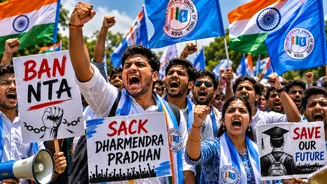
During the Karnataka march, participants carried placards and banners highlighting concerns related to examination management, evaluation systems and student welfare. Slogans such as "Ban NTA" and "Sack Dharmendra Pradhan" were raised during the protest.
CJP Protest in Delhi
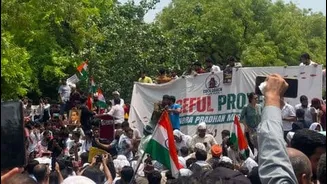
The Karnataka demonstration was one of several education-related protests witnessed across the country on June 6. In Delhi, the recently formed Cockroach Janta Party (CJP), led by founder Abhijeet Dipke, held its first major public protest at Jantar Mantar. The event drew participants demanding action over the alleged NEET 2026 paper leak and broader concerns regarding examination administration. The protest marked the group's transition from an online youth movement to an on-ground political campaign.
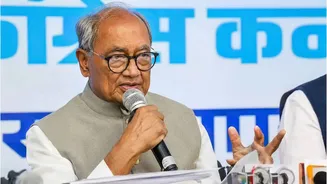
The CJP demonstration also sparked a political response from the BJP. BJP leader Nitin Nabin said India's youth wanted to contribute positively to nation-building and secure their future rather than become part of what he termed "negative politics". He argued that while democratic opposition was a legitimate part of public discourse, attempts to portray young people as anti-establishment would not succeed.
Nabin also criticised individuals "sitting abroad" who, he alleged, sought to influence Indian youth, asserting that the country's young people would determine their own direction and would not act as "puppets in the fists of a few people".
As protests continue across different parts of the country, demands for greater transparency, stronger safeguards in examination administration and accountability from educational authorities remain at the centre of the debate.