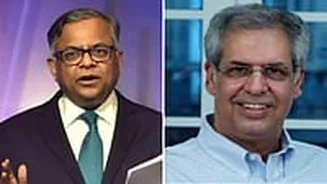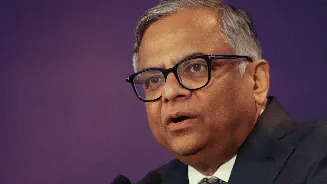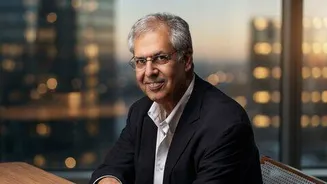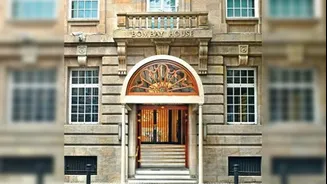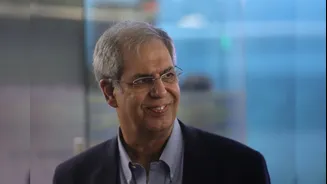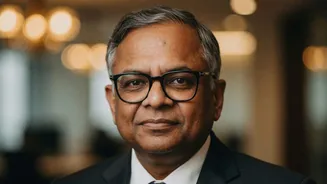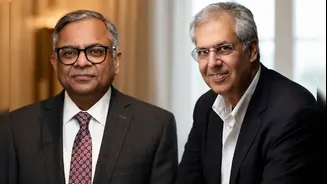






The Tata Sons boardroom dispute entered a second day on Friday, a day after the company’s board approved a further five-year term for N Chandrasekaran
as executive chairman and decided to initiate steps towards a public listing. The decisions were taken despite opposition from Tata Trusts, which holds about 66 per cent of Tata Sons. Tata Trusts has since challenged the reappointment, describing it as a “legal nullity”, and said it had not agreed to the listing proposal. The developments could lead to further legal and corporate proceedings. Thursday’s board meeting at Bombay House in Mumbai followed the RBI’s September 11 decision rejecting Tata Sons’ application to surrender its Core Investment Company registration. Here is the full picture in 10 points. 1. Tata Sons said Chandrasekaran acceded to the board's request to reconsider his decision not to seek reappointment, after which the board approved another five-year term by majority vote and resolved to begin complying with RBI guidelines, seeking guidance from the RBI, Tata Trusts and other stakeholders. 2. The resolution was reportedly carried by a 4–1 vote, with Venu Srinivasan voting in favour and Noel Tata against. The validity of the voting process is disputed by Tata Trusts. Chandrasekaran had told the board in August 2026 that he would not seek a third term after his tenure ends on February 20, 2027. 3. Tata Trusts said its reading of the Articles requires a majority of the Trusts' nominee directors to vote in favour and contended that, with Noel Tata voting against, the resolution was a ‘legal nullity’.” 4. The Trusts said Chandrasekaran's August 12 decision to step down had "attained finality" and could not be revived. Noel Tata submitted a legal opinion from former CJI D Y Chandrachud supporting the Trusts, which the Trusts said the board did not take note of. 5. Separately, the night before the meeting, the Sir Dorabji Tata Trust (SDTT) barred Srinivasan from the listing vote, citing his public pro-listing stand. In a September 16 letter he called it "illegal, without authority, and of no force or effect," arguing SDTT could not unilaterally restrict a joint nominee — he is nominated by both SDTT and the Sir Ratan Tata Trust — and that it was passed without deliberation or a hearing. 6. The trigger was the RBI's September 11 refusal to let Tata Sons surrender its Core Investment Company registration. Tata Sons had applied in March 2024, after repaying about Rs 21,813 crore of debt in FY24, to avoid a mandatory listing. The rejection means Tata Sons remains subject to the applicable regulatory framework for an Upper Layer NBFC, including the listing-related requirement, unless an alternative regulatory route is accepted. The RBI has also filed a caveat in the Bombay High Court. 7. In his note to board members, Noel Tata argued that a listed Tata Sons, answerable to institutional and foreign shareholders, could be less able or willing to support distressed group companies and long-gestation ventures. 8. He proposed instead seeking RBI reconsideration, a hearing, restructuring and other routes, and legal advice on remedies — and, if listing proved unavoidable, at least the three-year timeline proposed for compliance (till September 2029). He said the Trusts must deliberate before the board votes, and that he would veto a listing resolution if forced to vote. 9. Noel Tata tabled a proposal from the Shapoorji Pallonji (SP) Group, which holds about 18.37 per cent and backs listing, to monetise part of its stake: a sale of Sterling Investments Corporation and Cyrus Investments shares yielding at least Rs 25,000 crore, in two tranches over 18 months via a selective capital reduction through the NCLT, at income-tax fair value. 10. Shapoorji Pallonji Mistry stated, "let us not allow the listing to become even a minor point of division. Let us use it as a bridge. Let us make it an opportunity for reconciliation, renewal and a stronger institutional future."