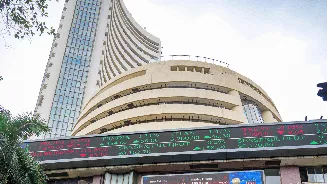








Indian equity markets opened on a weak note on Thursday, snapping a three-day winning streak as investors turned cautious ahead of the Union Budget and
ongoing global uncertainties. At around 9:30 am, the S&P BSE Sensex was down 516 points at 82,049, while the NSE Nifty50 slipped 193 points to 25,226. Selling pressure was most visible in metal and IT stocks, while broader markets also saw sharper losses. Markets Fall Despite Positive Economic Survey The decline came even after the Economic Survey projected strong medium-term growth for the Indian economy. However, investors chose to focus on near-term risks such as foreign fund outflows, a weakening rupee, rising crude oil prices, and Budget-related uncertainty. According to market participants, profit booking intensified as traders reduced risk exposure ahead of Budget Day. Expert View: Headwinds vs Tailwinds Dr V K Vijayakumar, Chief Investment Strategist at Geojit Investments Limited, said markets are currently navigating mixed signals. “As we approach the Budget, there are both headwinds and tailwinds. Geopolitical tensions and renewed tariff threats from the US, along with Brent crude nearing $70 a barrel, pose risks for Indian macros and oil-dependent sectors,” he said. However, he added that the Economic Survey’s outlook offers medium-term comfort. “Projected GDP growth of 6.8–7.2% in FY27 and inflation around 3.5% imply nearly 10% nominal GDP growth, which could translate into 15–17% earnings growth, lending resilience to the market,” Vijayakumar noted. Why Is the Stock Market Falling Today? 1. Continued FII Selling Foreign portfolio investors (FPIs) remain net sellers. In January so far, FPIs have sold Indian equities worth ₹43,686 crore, following record outflows of nearly $19 billion in 2025. On January 29 alone, FPIs sold shares worth ₹394 crore, while domestic institutional investors stepped in, buying equities worth ₹2,638 crore. Ajit Mishra, SVP – Research at Religare Broking, said sentiment remains cautious ahead of key domestic events. “Global uncertainty, mixed corporate earnings, continued FII selling, and weakness in the rupee are weighing on risk appetite,” he said, advising investors to stay selective and avoid chasing short-term rallies. 2. Rupee Hits Record Low The Indian rupee added to market pressure after touching a fresh all-time low of 91.9850 against the US dollar. The currency opened at 91.91 and is down about 2.3% this month, heading for its worst monthly performance since September 2022. Chief Economic Adviser V Anantha Nageswaran said the rupee’s decline should be viewed in a global context, noting that currencies of several current account deficit countries have weakened. A softer rupee raises input costs for companies and heightens inflation risks, keeping investors cautious. 3. Broader Market Weakness Ahead of Budget Selling pressure extended beyond frontline indices. Midcap and smallcap stocks saw steeper losses as investors cut exposure ahead of the Union Budget.
- Nifty Midcap 100 fell 1.07%
- Nifty Smallcap 100 slipped 1.41%
- India VIX rose 3.04%, indicating higher volatility
Sector & Stock Performance
On the Sensex, ITC, Hindustan Unilever, Asian Paints, Sun Pharma, and Adani Ports were among the few gainers.
On the downside, Tata Steel fell over 3%, while IT majors including HCL Tech, Infosys, TCS, and Tech Mahindra also declined.
Sectorally:
- Nifty Metal plunged 4.12%
- Nifty IT fell 1.53%
- Auto, Realty, Oil & Gas, PSU Banks also traded lower
Defensive pockets showed some resilience, with FMCG, Pharma, and Healthcare indices edging slightly higher.
Markets remain cautious as investors await clarity from the Union Budget, track global developments, monitor currency movement, and assess the trajectory of foreign investor flows. Volatility is likely to persist in the near term.