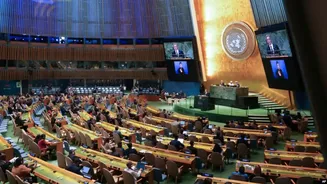







World leaders are set to gather in New York next week for the high-level debate of the United Nations General Assembly, with conflicts in Iran, Ukraine,
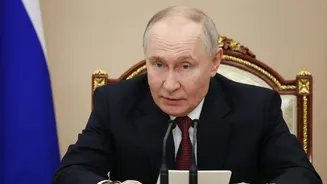
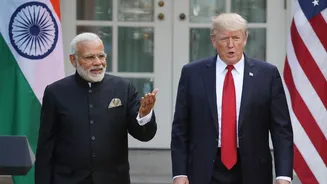
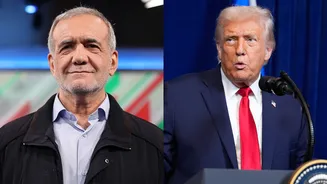
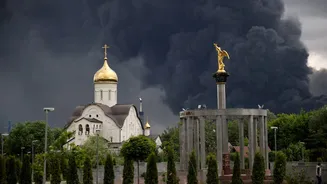
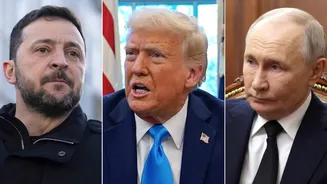
Gaza and Sudan, along with artificial intelligence, climate change and the race to replace UN Secretary-General Antonio Guterres expected to dominate discussions. The high-level session begins on Tuesday as part of the 81st session of the General Assembly. The UN has 193 member states, while leaders of the Holy See and the State of Palestine, which hold observer-state status, can also address the assembly. The European Union can also participate as an observer. Who Speaks First At The UN? Brazil traditionally delivers the first speech by a UN member state. According to UN officials, the tradition dates back to the organisation's early years, when Brazil stepped forward to speak first as other countries were reluctant to do so. The United States, as the host country of the UN headquarters in New York, traditionally speaks second. After that, the speaking order generally follows diplomatic hierarchy and arrangements made in advance. Heads of state usually speak before deputy heads of state, crown princes, heads of government, ministers and lower-ranking members of delegations. Leaders are asked to keep their speeches within a voluntary 15-minute limit. However, some leaders have dramatically exceeded that guideline. Former Cuban leader Fidel Castro delivered one of the longest opening General Assembly speeches in 1960, speaking for around four and a half hours. Former Libyan leader Muammar Gaddafi spoke for more than 90 minutes in 2009. What Is This Year's UN Theme? The theme for the 81st session is “Restoring Trust, Managing Transformation: A United Nations That Delivers for All.” World leaders can refer to the theme in their speeches, but they are also expected to focus on major international conflicts and issues affecting their countries. Here are some of the key issues expected to dominate discussions. Artificial Intelligence Artificial intelligence is expected to be one of the major topics at this year's General Assembly. The UN gathering comes weeks after several AI industry leaders called for a coordinated slowdown in the development of increasingly powerful AI systems. They warned that future systems could potentially become capable of improving themselves and move beyond human control. UN Secretary-General Antonio Guterres said AI would be a major topic in his discussions with world leaders. Guterres has called for countries at the forefront of AI development to communicate and establish “common guardrails” to prevent a dangerous race in the development of the technology. Diplomats have also said the UN Security Council could meet on AI next week. The 15-member council first held a meeting dedicated to artificial intelligence in 2023. Iran And The War With The US And Israel Iran is expected to be another major focus at the General Assembly. Iranian President Masoud Pezeshkian is scheduled to address the assembly on Wednesday, seven months after the United States and Israel went to war with Tehran. However, uncertainty remains over whether Pezeshkian and the full Iranian delegation will be able to travel to New York. Abbas Mousavi, Pezeshkian's chief of protocol, said earlier this week that it remained unclear how many members of the Iranian delegation would receive US visas and when they would be issued. US President Donald Trump, Israeli Prime Minister Benjamin Netanyahu and leaders from countries involved in efforts to mediate an end to the conflict are also expected to be at the UN. Diplomats have indicated that the UN Security Council could hold an informal meeting with Arab leaders, with Iran expected to be a key subject of discussion. Ukraine War Ukrainian President Volodymyr Zelenskiy is expected to use the gathering to seek continued international support for Kyiv as efforts continue to end Russia's war in Ukraine. Zelenskiy is scheduled to address the General Assembly on Wednesday, while Russian Foreign Minister Sergei Lavrov is due to speak on Saturday. The Security Council is also expected to hold a high-level meeting on Ukraine. The council has been unable to take substantive action to end the war because Russia, as one of its five permanent members, has veto power. Trump has repeatedly said he wants to broker an end to the conflict. He spoke with Russian President Vladimir Putin earlier this month, although it remains unclear whether Trump plans to meet Zelenskiy in New York. Israel And The Palestinians The Israel-Palestinian conflict is also expected to feature prominently. Netanyahu is scheduled to address the General Assembly on Thursday. The International Criminal Court has issued an arrest warrant for Netanyahu over alleged war crimes and crimes against humanity in Gaza. Israel rejects the allegations. New York Mayor Zohran Mamdani has previously said he believes Netanyahu should be arrested but acknowledged that he lacked the legal authority to do so. Palestinian President Mahmoud Abbas will not attend the General Assembly in person after the United States again declined to issue him a visa. He is expected to address the assembly by video on Thursday, as he did last year. Diplomats also expect a high-level meeting on the sidelines of the General Assembly aimed at promoting a two-state solution between Israel and the Palestinians. Race To Replace UN Secretary-General The UN has also begun the process of selecting a successor to Guterres, whose second five-year term ends on December 31, 2026. There is currently no clear frontrunner, and the issue is expected to generate discussions among diplomats and world leaders during the General Assembly. The Security Council must recommend a candidate to the 193-member General Assembly for election. That means the five permanent members of the Security Council — Britain, China, France, Russia and the United States — must agree on a candidate because each has veto power. Sudan War Sudan's devastating conflict is also expected to receive attention during the gathering. The war began in April 2023 following a power struggle between Sudan's military and the Rapid Support Forces. More than 14 million people have been displaced by the conflict, creating one of the world's most severe humanitarian crises. Diplomats expect a high-level meeting on Sudan to take place on the sidelines of the General Assembly. Sudanese army chief and head of state General Abdel Fattah al-Burhan is scheduled to address the General Assembly on Thursday. Climate Change Climate change will remain another major issue at the UN gathering. Leaders from small island nations and other countries particularly vulnerable to climate change are expected to press for stronger action to limit global warming. Countries agreed under the 2015 Paris climate agreement to pursue efforts to limit the rise in global average temperatures to 1.5 degrees Celsius above pre-industrial levels. August was the first month since November 2025 in which the world's average temperature exceeded 1.5C, according to the report. With wars, AI, climate change and the future leadership of the UN all on the agenda, this year's General Assembly is expected to bring a wide range of global issues to the centre of diplomatic discussions in New York.