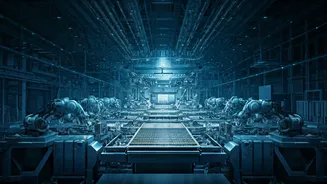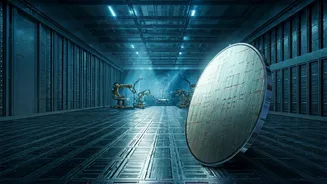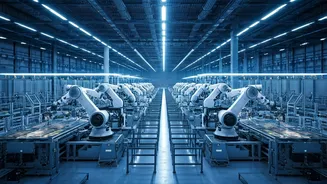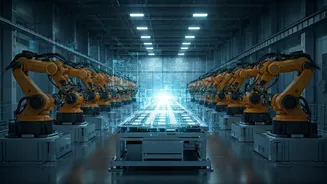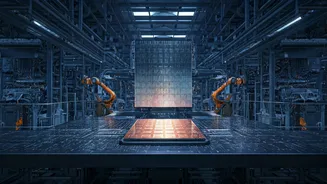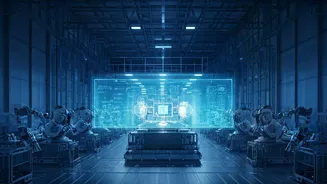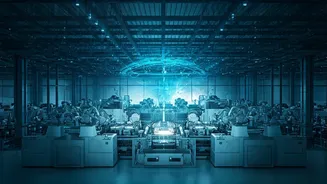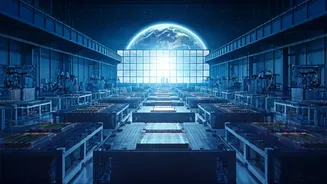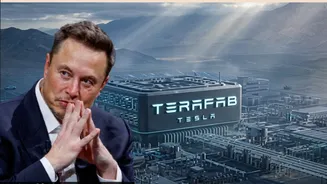




On March 21, 2026, Elon Musk unveiled Terafab , a colossal $20–25 billion semiconductor megafactory project jointly run by Tesla, SpaceX, and xAI , in a dramatic
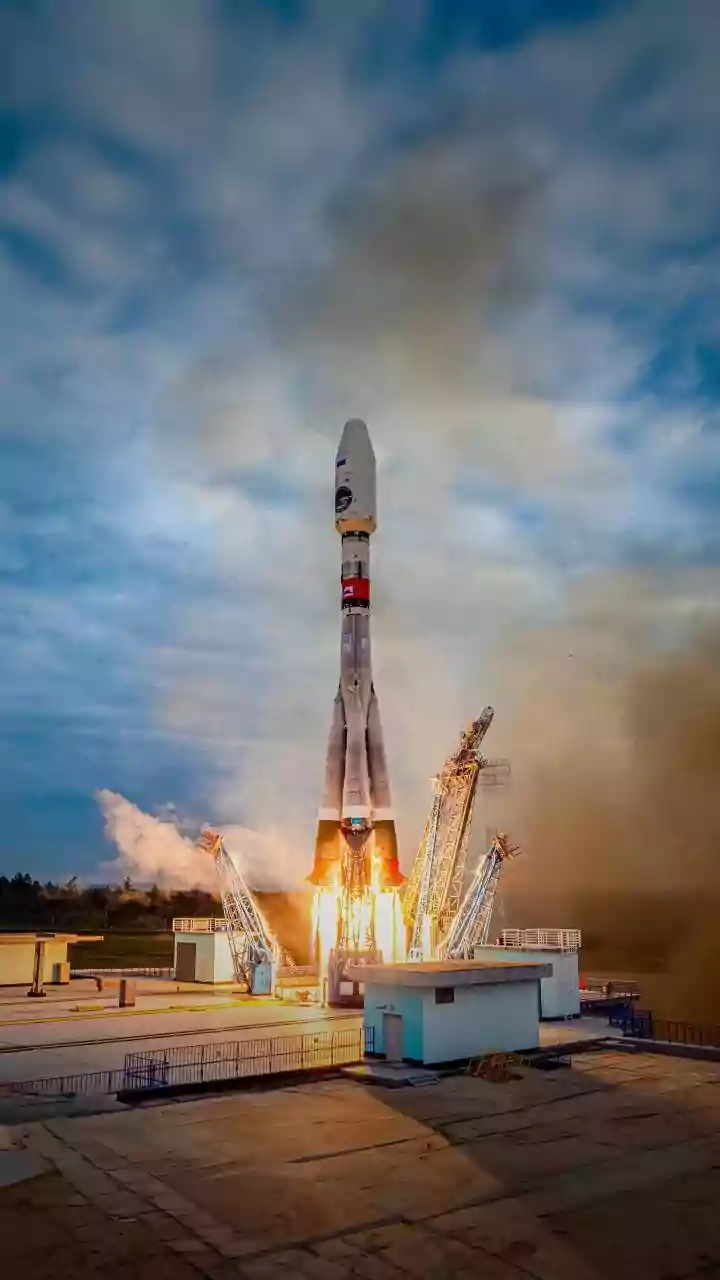
event streamed live from Austin, Texas. While mainstream coverage focused on the factory’s immediate goal of producing terawatt-scale custom AI chips for Optimus robots, robotaxis, and orbiting data centers, Musk himself framed the announcement in far grander, almost cosmic terms. In his keynote, Musk explicitly referenced the Kardashev scale , the famous 1964 metric that classifies civilizations by their energy-harnessing capability. He stated that Terafab represents “one step along the way” toward humanity becoming a Kardashev Type II civilization , a species that can capture and utilize the entire energy output of its star (the Sun). He went further, saying the project is part of the long-term path to a “galactic civilization” and that he believes we can realistically reach Type II status within approximately 50 years. What Musk Actually Envisions: The Terafab → Dyson Swarm Roadmap According to Musk’s own words and the logical chain he laid out: Terafab produces chips at unprecedented scale The factory will output enough compute power (up to 1 terawatt/year) to fuel millions of Optimus humanoid robots on Earth and massive AI data centers in orbit. Roughly 80% of production is earmarked for space applications. Robots and chips go to space Optimus robots, powered by Terafab chips, will be sent via Starship to the Moon, near-Earth asteroids, and eventually other locations. These robots will begin mining resources (silicon, metals, rare elements) and constructing additional factories in space. Self-replicating space factories Once the initial off-world factories are built, they will use local materials to make more chips, more robots, more Starships, and more satellites , creating an exponential replication loop. Building the Dyson Swarm The endgame is a vast Dyson swarm , not a solid shell, but billions to trillions of orbiting solar-power satellites (think Starlink but vastly larger and purpose-built for energy collection). These will surround the Sun in a loose, expanding cloud, capturing an enormous fraction of its total energy output. Energy beamed back to Earth The captured solar energy , potentially hundreds of millions to billions of times more than humanity currently uses , will be converted into microwaves or lasers and safely beamed down to receiving stations on Earth, providing effectively unlimited, clean power. Powering a Matrioshka Brain With near-infinite energy available in space, Musk has repeatedly endorsed the concept of a Matrioshka Brain , a hypothetical mega-structure of nested Dyson swarms/compute layers that uses stellar energy to run computation at scales unimaginable today. He has described such a system as the ultimate substrate for superintelligence, capable of simulating entire universes or solving problems beyond human comprehension. In viral discussions, many interpret this as approaching “god-like” intelligence. Musk has said the full transition to Type II , with a functional Dyson swarm harvesting most of the Sun’s energy , could plausibly happen in about 50 years if exponential progress in robotics, AI, launch costs, and in-situ resource utilization continues. Why This Matters: From Today’s World to a Type II Future Right now, humanity is roughly at Kardashev Type 0.73 , we harness only a tiny fraction of Earth’s available energy (solar, wind, geothermal, nuclear, fossil fuels combined). Reaching Type I (full planetary energy mastery) would already solve climate change, poverty, and resource scarcity on Earth. Type II , full stellar energy capture , would make energy so abundant that physical constraints on civilization largely disappear. Food, water, manufacturing, space travel, even mind-uploading or digital immortality become engineering problems rather than physical impossibilities. Musk’s argument is simple and brutal: the single biggest limiter today is compute + energy. Terafab removes the compute bottleneck by internalizing chip production. Space-based solar + self-replicating robotics removes the energy and material bottleneck. Together, they bootstrap the path to a Dyson swarm and Type II status. The Viral Reaction & Philosophical Leap In India and across global social media, explainer videos have taken Musk’s remarks and run with them at full speed: “Elon just dropped a bomb,” “This is how we become gods,” “Matrioshka Brain = God.” Many clips connect Terafab directly to asteroid factories → Dyson swarm → laser power to Earth → Matrioshka Brain → humanity achieving near-divine superintelligence. While Musk did not say every word of that chain in the March 21 event, the logical steps are consistent with his public statements over the past decade (Joe Rogan podcasts, X posts, Starship presentations). Reality Check & Timeline Skeptics point out:
- 50 years is Musk’s characteristically optimistic horizon (Starship was “2–3 years away” in 2016).
- Building even one orbital factory, let alone a swarm, faces physics, economics, and geopolitics challenges.
- Energy beaming at scale remains unproven at gigawatt levels.
Yet Musk has a track record of eventually delivering on seemingly impossible goals , reusable rockets, mass EV production, global satellite internet. If Terafab succeeds even partially, it could accelerate robotics, AI, and space industry timelines by decades.
Terafab is not just another factory. In Elon Musk’s own framing, it is the industrial seed for humanity’s greatest leap: from a fragile, planet-bound species to a star-harnessing, potentially god-like civilization. Whether the 50-year Type II target holds or slips to 100 years, the direction is clear , Musk is betting everything on robotics, AI chips, and space industrialization to drag humanity up the Kardashev scale as fast as physics allows.
The launch of Terafab may be remembered as the day the first serious industrial step toward a Dyson swarm , and everything that comes after , officially began.