









The Reserve Bank of India (RBI) chose to maintain the benchmark repo rate at 5.25 per cent on Friday, signalling caution as escalating tensions in West
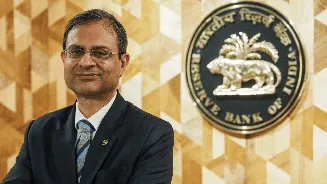
Asia continue to create uncertainty around inflation, energy costs, and overall economic growth. Announcing the outcome of the latest Monetary Policy Committee (MPC) meeting, RBI Governor Sanjay Malhotra said all six members of the rate-setting panel unanimously voted in favour of keeping policy rates unchanged. The committee also retained its "neutral" monetary policy stance, indicating flexibility to respond to evolving economic conditions. "The central bank's rate panel noted that the global environment has deteriorated," RBI Governor Sanjay Malhotra said. The latest decision follows a similar move in the previous policy review, when the central bank opted to pause any rate action while assessing the impact of geopolitical developments on the domestic economy. Highlights From The RBI MPC Meeting Repo Rate Remains Unchanged: With inflation risks resurfacing and global uncertainties mounting, the RBI decided against making any changes to its key policy rates. The benchmark repo rate remains at 5.25 per cent, while the Standing Deposit Facility (SDF) rate has been retained at 5.00 per cent. The Marginal Standing Facility (MSF) rate and Bank Rate continue to stand at 5.50 per cent. The central bank's decision reflects concerns that volatility in global commodity markets, particularly crude oil, could affect price stability and growth momentum in the coming quarters. Growth Forecast Lowered For FY27: While maintaining interest rates, the RBI revised its economic growth outlook downward for the financial year 2026-27. The central bank now expects India's GDP to expand by 6.6 per cent during FY27, lower than its earlier estimate of 6.9 per cent. The revision comes amid concerns over rising oil prices, supply-chain disruptions linked to geopolitical tensions, and weather-related uncertainties that could impact economic activity. According to the latest projections, GDP growth is expected to be 6.6 per cent in the first quarter of FY27, 6.3 per cent in the second quarter, 6.5 per cent in the third quarter, and 6.8 per cent in the final quarter of the fiscal year. Inflation Outlook Turns Less Comfortable: The RBI also raised its inflation forecast for FY27, reflecting concerns over the impact of higher commodity prices and geopolitical risks. Consumer price inflation is now projected at 5.1 per cent for the financial year, up from the earlier estimate of 4.6 per cent. For individual quarters, the MPC expects inflation to average 4.2 per cent in Q1, rise to 5.1 per cent in Q2, and climb further to 5.9 per cent in both Q3 and Q4. The central bank noted that risks to the inflation outlook remain evenly balanced, even as global developments continue to be closely monitored. West Asia Conflict Emerges As A Main Concern: The governor said that despite India's relatively strong position amid global uncertainty, the country must continue building safeguards against external shocks. "It is important to not only confront and address these challenges, but also, at the same time, take this as an opportunity to further enhance our resilience," he added. Highlighting the risks facing the global economy, Malhotra cited the prolonged conflict in West Asia, rising energy costs and disruptions to international supply chains as major areas of concern. Malhotra also pointed out the divergence in global financial markets. While equity markets continue to draw support from optimism surrounding artificial intelligence-driven growth, bond markets remain under strain due to renewed inflation fears and concerns over rising government debt levels.