







Germany has accused Russia of attempting an attack with an explosive drone at Leipzig-Halle Airport, prompting Berlin to take diplomatic measures against
Moscow. The incident has also triggered a warning from Lithuania, which says Russia is highly likely to escalate attacks against the European Union. The drone was discovered on August 4 in a cargo area near a runway, close to an aircraft belonging to Ukrainian company Antonov Airlines. Its discovery temporarily shut down the airport, while explosives specialists used a robot to deal with the device. German Interior Minister Alexander Dobrindt said investigators had found a configuration and components consistent with Russian technology used during the Russia-Ukraine War. Berlin has not, however, publicly released all the evidence behind its attribution.
What Happened At Leipzig-Halle Airport?
According to an Associated Press report, an employee spotted the drone near the cargo area on the evening of August 4. Authorities responded by temporarily shutting down operations and bringing in specialists to neutralise the explosives.
A second drone was reportedly destroyed after colliding with an aircraft near the airport. The incident has raised particular concern because Leipzig-Halle is a major cargo hub and the device was discovered close to active aviation infrastructure.
Dobrindt said the investigation pointed towards Russian responsibility for what Germany considers an attempted attack. “Taken together, the police investigations, the pattern and intelligence findings prove a Russian responsibility for the attempted attack at Leipzig airport,” he said.
He also described the device as showing “a high degree of technical expertise”. According to Dobrindt, however, the operation appeared to have been carried out by “low-level agents” acting “on behalf of Russian state entities”.
Germany Retaliates As Lithuania Sounds Alarm
Berlin has responded with a series of measures. Germany plans to shut a Russian consulate in Bonn from September 18 and has also announced the closure of the Russian House cultural centre in Berlin, although a date has not yet been set.
German authorities are additionally considering tighter entry controls for Russian citizens and have said they will recommend adding more Russian individuals to the European Union's sanctions list. Russia's ambassador to Germany has also been summoned by the Foreign Ministry.
The incident has broader implications because Lithuania is warning that Moscow could escalate attacks against EU countries. Lithuanian officials argue that previous deterrence measures have failed to change Russian behaviour.
Russia Denies Involvement
Moscow has strongly rejected Germany's accusations. The Russian Embassy in Berlin called the claims absurd and warned that the allegations would have consequences.
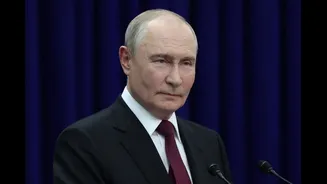
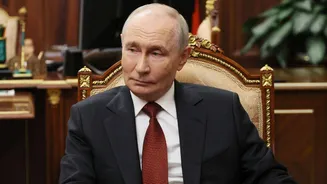
Russian President Vladimir Putin has also accused German Chancellor Friedrich Merz's government of blaming Russia to distract from domestic problems and falling approval ratings. Putin additionally suggested that evidence could have been planted to frame Moscow for the incident.
The competing claims leave Germany and Russia at odds over what happened at Leipzig-Halle and who was responsible. Berlin says its intelligence findings point to Russia, while Moscow denies any involvement.
The incident nevertheless comes at a sensitive point for European security. With Lithuania warning of possible further escalation, Germany's response suggests that suspected Russian activity on European territory is increasingly being treated as a national security issue.