








What is the story about?
ISLAMABAD (AP) — Pakistan's Foreign Minister Ishaq Dar urged Iran and the United States to honor their ceasefire commitments following the conclusion of
historic talks that did not yield an agreement. Dar emphasized the necessity for all parties to maintain the ceasefire, highlighting Pakistan's ongoing role as a mediator in facilitating dialogue between the two nations in the upcoming days.
Details of the Negotiations
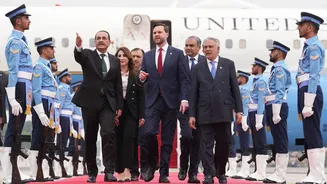
The United States and Iran concluded a significant round of face-to-face discussions in Islamabad early Sunday, failing to reach a consensus on key issues, leaving the status of a tenuous two-week ceasefire in question.Vice President JD Vance, leading the U.S. delegation during the 21 hours of negotiations, noted that discussions ended without a deal due to Iran's refusal to accept U.S. conditions regarding nuclear weapons development.
There was no immediate response from the Iranian delegation or the Pakistani mediators regarding the outcomes of the talks.
Ceasefire Context and Implications
The negotiations commenced shortly after a fragile ceasefire was announced amid a conflict that has claimed thousands of lives and impacted global markets, now entering its seventh week.Vance confirmed his continuous communication with U.S. President Donald Trump and key administration officials throughout the talks, emphasizing the U.S. objective to secure a commitment from Iran not to pursue nuclear weapon capabilities.
Continued Military Operations
As the talks concluded without a resolution, Trump announced the U.S. military's actions in the Strait of Hormuz, indicating that two destroyers had moved into the area to begin mine-clearing operations, a significant move since the onset of the war.Despite the ongoing negotiations, Trump asserted, “We’re sweeping the strait. Whether we make a deal or not makes no difference to me,” highlighting the seriousness of U.S. military efforts in the region.
Iran's Position and Demands
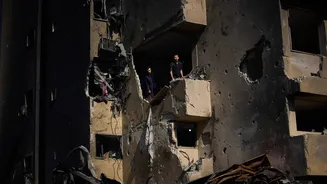
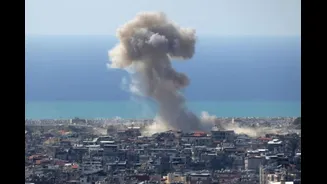
Iran's delegation articulated preconditions for engagement, including demands for reduced Israeli military actions in southern Lebanon and compensation for damages incurred during the conflict.The ongoing war has resulted in at least 3,000 fatalities in Iran, 2,020 in Lebanon, and numerous casualties in Israel and Gulf Arab states, with significant infrastructure damage across multiple Middle Eastern nations.
Future Negotiations and Regional Dynamics
Despite the failure to reach an agreement, further discussions are anticipated as the U.S. and Iranian delegations remain engaged with Pakistani officials, with a focus on resuming talks after a short recess.In a broader context, the discussions are influenced by the involvement of various regional powers, including representatives from China, Egypt, Saudi Arabia, and Qatar, who are facilitating dialogue indirectly.