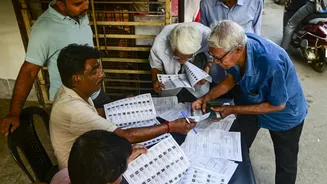










New Delhi: The Election Commission (EC) has made it mandatory for new voters applying for inclusion in the electoral rolls to provide their parents' Special
Intensive Revision (SIR) details, extending a requirement that was earlier introduced as part of the ongoing electoral roll verification exercise. According to EC officials, the requirement is not limited to existing voters who were not covered during the previous Special Intensive Revision (SIR). It also applies to fresh applicants seeking to register as voters through Form 6, which is used for inclusion in the electoral rolls. The declaration requiring parents' SIR details was first introduced during the Bihar SIR exercise rolled out in June last year. Since then, new applicants have been required to submit the declaration along with Form 6. "Daily SIR bulletins of Bihar showed the form filled along with declarations," an EC functionary told PTI. The official clarified that the declaration was introduced through administrative instructions and that Form 6 itself has not been amended. "It helps in mapping electors and reduces the documents new voters need to submit along with the application," the official added. EC officials also pointed out that applicants using the online Form 6 portal cannot complete the registration process unless the declaration is filled in, effectively making the requirement mandatory for digital applications as well.
EC Defends SIR Amid Criticism
The development comes as the Election Commission continues to defend the Special Intensive Revision process against criticism from international observers and opposition parties.
EC officials rejected concerns raised by United Nations Special Rapporteurs, who recently questioned the transparency of the SIR exercise in a letter to the Indian government.
According to the poll authority, the revision exercise is being carried out in accordance with constitutional provisions and has also received the backing of the Supreme Court.
Officials said the objective of the SIR is to ensure that electoral rolls remain accurate by including all eligible Indian citizens while removing duplicate entries, deceased voters, those who have permanently shifted, absent electors and foreign nationals.
The Commission also dismissed allegations that the exercise disproportionately affects minority voters, including claims relating to Nandigram in West Bengal.
EC officials maintained that voters are provided adequate opportunities to challenge exclusions from the electoral rolls and denied any bias in the revision process.
The UN Special Rapporteurs, however, have expressed concerns that the Special Intensive Revision lacks transparency and could potentially affect voting rights, prompting the Election Commission to reiterate that the exercise is aimed solely at improving the accuracy and integrity of the electoral rolls.