







With negotiations faltering in Islamabad, Iran is making it clear it won't be rushed into a deal. A source quoted by Fars said Tehran sees no urgency to shift
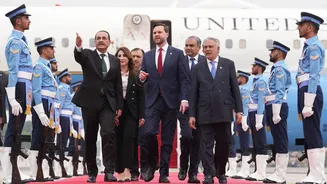
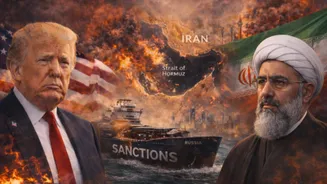
its stance, warning that the status of the Strait of Hormuz will remain unchanged unless Washington agrees to what it calls a "reasonable deal." Talks between the United States and Iran lasted more than 20 hours in Islamabad but failed to yield results following Tehran's refusal to accept Washington's terms. Vice President JD Vance said US negotiators had clearly outlined their position, but Tehran declined to accept them. Among points of contention to no surprise were the Strait of Hormuz and Iran's nuclear program. Iran currently has “no plan for a next round of negotiations,” reported Iran’s state-affiliated Fars news agency, citing a source close to the negotiating team on Sunday. “Iran is in no hurry, and until the US agrees to a reasonable deal, there will be no change in the status of the Strait of Hormuz,” Fars reported the source as saying. Also Read: Strait Of Hormuz Gridlock: What Gets Ships Moving Amid Fragile US-Iran Truce?
Why the Strait of Hormuz is Iran's biggest leverage
The reopening of the Strait of Hormuz, through which nearly one-fifth of the world's crude oil passes, is one of the key leverages Iran has over the US.
President Donald Trump had expressed blind optimism regarding it prior to the meeting, saying, “We're going to open up the Gulf with or without them... or the strait as they call it. I think it's going to go pretty quickly, and if it doesn't, we'll be able to finish it off. We will have that open fairly soon.”
Also Read: The One Dealbreaker That Sank Iran-US Talks
A two-week, conditional ceasefire between the United States and Iran began on April 8, where movement of vessels through the Strait of Hormuz was also discussed. However, when Israel struck Lebanon, this was taken off the table. Only a few vessels, mostly those linked to Iran, have made the transit since the truce, while the majority of ships waiting in the Gulf stayed put.
Iran has demonstrated both the capability and the willingness to target commercial shipping. A series of attacks, along with threats against vessels, has driven daily transits down from roughly 130 to just a handful. In reality, the strait has never been physically closed. And ships were never blocked. They were just being deterred.
Iranian officials have also suggested that vessels may need to notify authorities before transiting, an idea some analysts see as a possible precursor to asserting greater control over the waterway, potentially even through the imposition of transit fees.