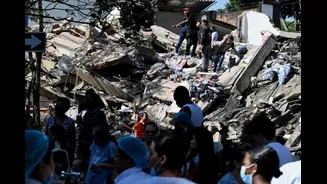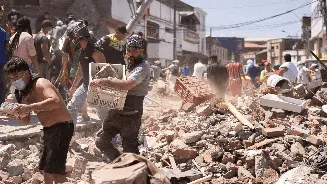









Rescue teams in western Colombia are searching through mountains of rubble for survivors after a powerful earthquake struck the region, killing at least
250 people. The 7.4-magnitude earthquake struck at 07:34 local time on Monday, with its epicentre near San José del Palmar in the Chocó region. The US Geological Survey (USGS) estimates there is roughly a one-in-three chance that the earthquake could result in more than 1,000 casualties. The quake caused buildings to collapse or sustain serious damage across several cities, including Pereira, Cali, Quibdó and Manizales. Rescue workers have been calling for silence at damaged sites so they can listen for people trapped beneath the debris. Families, soldiers and volunteers have joined emergency crews in the search as authorities assess the full scale of the destruction. Colombia's geological service said the earthquake struck at a depth of about 96km, making it one of the strongest earthquakes to hit the country in recent decades. Chocó Governor Nubia Carolina Córdoba-Curi reported injuries and significant damage to buildings in Quibdó, a city of about 130,000 people. She warned that aftershocks had been detected and urged residents to remain cautious while emergency teams assessed damaged structures. In neighbouring Risaralda, Governor Juan Diego Patiño described "serious damage to some buildings" in Pereira and said the situation was "very severe". The earthquake was felt hundreds of miles away in the capital, Bogotá, where Mayor Carlos Galán said there was no major damage. Tremors were also reported in parts of Venezuela and Ecuador. The US tsunami warning system said there was no tsunami threat.
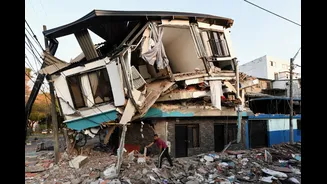
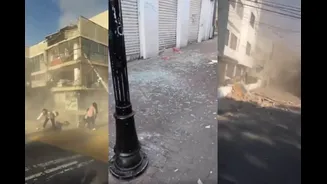
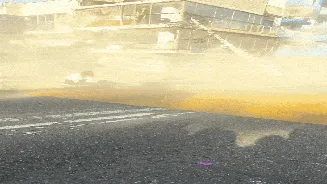
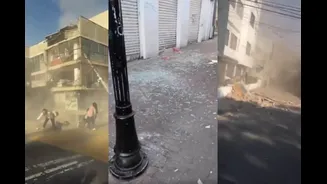
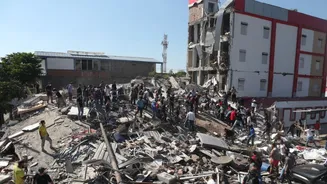
Images from the affected areas showed collapsed homes and buildings, shattered windows and debris covering streets. In Manizales, part of a neo-Gothic cathedral tower collapsed onto the nave, sending rubble into the plaza and prompting emergency evacuations.
In Cali, a city of about two million people, rescue teams responded to at least 19 collapsed buildings where people were reportedly trapped. Footage from Chocó showed damaged roads and buildings as residents gathered in open areas following aftershocks.
Emergency authorities are still assessing the number of injuries and the extent of the structural damage across Chocó, Risaralda and Valle del Cauca.
Colombia's disaster agency said it was working with local authorities to reach remote communities that may have been cut off by landslides.
President Abelardo de la Espriella said on Monday night that financial and humanitarian assistance had been allocated to more than 1,400 families affected by the earthquake in Chocó. Injured people were being transferred to Medellín for medical treatment, while temporary housing would be provided to families whose homes had been damaged.
In Cali, authorities were searching for missing people, treating the injured and maintaining security, the president said.
"Cali and Valle del Cauca are not alone. The State is present and will continue to act with all its capacity to protect and support our people. ¡Stand Firm for the Homeland!" he wrote on X.
Espriella said he would personally supervise recovery efforts and establish an emergency centre in San José del Palmar.
Colombia's aviation regulator temporarily suspended flights at several airports in the region, including those serving Pereira, Manizales, Quibdó, Armenia, Cartago and Buenaventura.
Engineers were assessing the facilities for possible structural damage, Reuters reported. Governors across western Colombia urged residents to remain outside while engineers inspected damaged buildings.
Córdoba-Curi said the mountainous terrain around San José del Palmar could complicate rescue operations. Patiño said emergency services in Pereira had been overwhelmed by calls and could require additional support as assessments continued.
US Secretary of State Marco Rubio said Washington was monitoring the earthquake and was prepared to assist Colombia. "The Trump Administration is closely monitoring the large earthquake that struck Colombia and stands ready to support the people of Colombia and President @ABDELAESPRIELLA’s Administration," he wrote on X.
He also urged US citizens in Colombia to enrol with the State Department's travel registration system.
Colombia lies along the Pacific Ring of Fire, where several tectonic plates converge, making it one of the most seismically active countries in the region. The country has experienced several major earthquakes, including the 1999 Armenia earthquake, which killed more than 1,100 people.
The latest earthquake comes after deadly earthquakes struck parts of neighbouring Venezuela in June, adding to concerns across the region about further seismic activity.