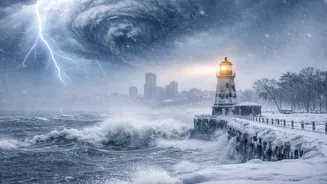

Another winter storm could soon threaten the US East Coast, arriving just days after deadly Winter Storm Fern buried some regions under nearly two feet
of snow. Forecasters warn the new system could be stronger, with heavy snow, powerful winds, and coastal flooding possible, though many uncertainties remain. According to the National Weather Service’s Weather Prediction Center (WPC), the storm could begin as early as Friday, Jan. 30, and linger until Monday, Feb. 2, with potential impacts stretching from Georgia to Maine. Low pressure is expected to rapidly develop off the Carolina coast and track north along the Mid-Atlantic, interacting with a very cold air mass already entrenched across much of the eastern United States.
Storm Timing and Potential Impacts
Forecast models show the system developing offshore late this week, but its exact track remains uncertain. If it stays farther offshore, precipitation could be pulled away from the coast. A closer track, however, could bring heavy, wind-driven snow, dangerous travel conditions, and significant coastal impacts.
Forecasters say confidence has increased in strong onshore winds and coastal flooding, especially with a full moon heightening tidal concerns. Still, uncertainty remains around snowfall totals, the rain-snow line, and overall severity.
What Is a Bomb Cyclone?
The storm's potential to quickly intensify into a bomb cyclone, or bombogenesis, is one of the main causes for concern. This happens when cold and warm air masses collide, causing a storm's central pressure to drop by at least 24 millibars in a 24-hour period.
Bomb cyclones can cause strong winds, a lot of snow, and coastal flooding. They frequently form off the East Coast. According to meteorologists, this system could rapidly intensify offshore, possibly bringing winds of 40 mph or more to places like Cape Cod and the Outer Banks.
Arctic Blast Adds to the Threat
The potential storm is unfolding alongside an arctic blast, with frigid temperatures expected to persist across the eastern half of the US into next week. Extreme cold warnings and freeze alerts have been issued across the South, Midwest, and Southeast, reaching as far south as Florida.
Experts warn prolonged sub-freezing temperatures could worsen storm impacts, keeping ice frozen longer, delaying cleanup efforts, and slowing power restoration, similar to what communities experienced after Winter Storm Fern, which killed at least 30 people nationwide.
As of the latest forecast, the heaviest snow could fall across southeastern Massachusetts, Delaware, Maryland, eastern Virginia, and North Carolina, though officials stress the outlook may change as the storm develops.