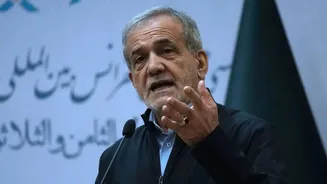





Iranian President Masoud Pezeshkian has submitted a letter of resignation to the office of Supreme Leader Mojtaba Khamenei, according to a report by Iran International.
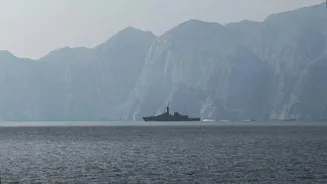
The report, citing an anonymous Iranian official, said the letter argued that the Islamic Revolutionary Guard Corps (IRGC) had assumed effective control over significant areas of government decision-making, leaving the president and other senior officials excluded from key discussions. According to the source, Pezeshkian wrote that he was no longer able to govern effectively or fulfil his constitutional responsibilities under the current circumstances and had therefore requested permission to step down. Anonymous sources cited by Iran International said tensions between Pezeshkian and the leadership of the IRGC had intensified over the handling of the recent conflict involving Iran and its economic consequences. The sources said the main dispute concerned "the way the war was managed and its destructive consequences on the people's livelihoods and the country's economy". Presidential Office Deputy Head of Communications Mehdi Tabatabaei, however, wrote in a post on X that the Iran International report is "false" and a part of the "media games" amid the ongoing negotiations for a ceasefire. The report comes amid broader questions about decision-making within Iran's leadership structure following months of regional tensions and military confrontation. Last week, US officials told CBS News that Iran's supreme leader was operating from a secret location and had limited direct contact with the outside world. According to the officials, he could only be reached through a "labyrinth" of couriers. The officials also said even senior Iranian government figures were unaware of his location and could not communicate with him directly. Meanwhile, US President Donald Trump said on Sunday that Iranian officials remained "very tough negotiators" as discussions continue over a broader agreement between Washington and Tehran. Speaking in an interview with Lara Trump, the president said the United States was taking a patient approach to the negotiations. Earlier this year, Trump described Iran's leadership as "seriously fractured", saying internal divisions within the country had influenced his decision to extend a ceasefire arrangement indefinitely before a previous deadline expired. According to a source familiar with the talks, recent revisions made by President Trump to a proposed US-Iran memorandum of understanding included notable changes concerning the Strait of Hormuz and the future handling of Iran's highly enriched uranium stockpiles. The broad framework under discussion reportedly includes a 60-day cessation of violence, provisions aimed at reopening the Strait of Hormuz, and a mechanism for resuming negotiations over Iran's nuclear programme. Multiple sources told CBS News that the proposal could also include sanctions relief or waivers allowing Iran access to billions of dollars in frozen assets, depending on progress in diplomatic negotiations. Pakistan is reportedly serving as the lead mediator between Washington and Tehran, although details of the exchanges remain limited. Trump had said on Friday that he expected to make a final decision on the proposed agreement that day. However, further amendments were subsequently sent to Iran. In an interview recorded Thursday, the president said he was in "no hurry" to reach a deal.