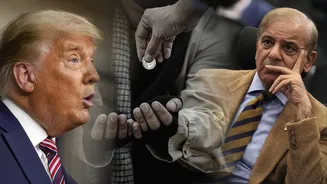






Pakistan has reportedly sought a $10 billion currency support facility from the United States, aiming to bolster its foreign exchange reserves and ease
pressure on its financially strained economy following its diplomatic role in mediating talks linked to the Iran conflict. According to Reuters, Islamabad believes its involvement in facilitating communication between Washington and Tehran has strengthened bilateral ties and created an opportunity to seek greater economic support from the United States. The request marks one of Pakistan's most significant financial overtures to Washington in recent years and comes as the country continues implementing difficult economic reforms under an International Monetary Fund (IMF) bailout programme while attempting to diversify its external sources of financing.
Pakistan Requests Five-Year US Currency Support Facility
According to a source familiar with the discussions cited by Reuters, Pakistan has approached US Treasury Secretary Scott Bessent seeking a Bilateral Exchange Stabilisation Support Facility between the two governments.
The proposed arrangement would reportedly have a maturity period of up to five years and is designed to strengthen Pakistan's foreign exchange reserves, support the Pakistani rupee and provide greater financial stability during a period of economic adjustment.
If approved, the facility would offer Islamabad an additional financial cushion while reducing its dependence on emergency multilateral assistance and periodic IMF disbursements.
Economic Relief Amid IMF Reform Programme
Pakistan remains under a $7 billion IMF Extended Fund Facility, which has required the government to implement higher taxes, tighter fiscal controls and structural reforms aimed at stabilising the economy. The country narrowly avoided sovereign default in 2023 after securing a $3 billion IMF Stand-By Arrangement, before subsequently negotiating the larger $7 billion programme. Islamabad also received an additional $1.3 billion IMF loan focused on climate resilience and disaster preparedness.
Despite those programmes, Pakistan's foreign exchange reserves continue to rely heavily on official financing, loan rollovers and deposits from partner countries including China and Saudi Arabia.
Iran Mediation Raises Diplomatic Expectations
The financial request comes after Pakistan played a diplomatic role in facilitating contacts linked to the Iran conflict, enhancing its standing with both Washington and regional stakeholders. Islamabad has positioned itself as a potential intermediary during efforts to reduce tensions between the United States and Iran, with senior Pakistani officials engaging in diplomatic outreach as fighting intensified across the Middle East.
Pakistani officials reportedly hope that the improved diplomatic engagement will translate into broader economic cooperation, including financial assistance and increased American investment.
Broader Push For Stronger US Economic Partnership
Beyond the proposed currency facility, Pakistan has sought to expand economic cooperation with the Trump administration across multiple sectors. Recent initiatives include a stablecoin agreement for cross-border payments with an affiliate of World Liberty Financial, discussions surrounding redevelopment of the Roosevelt Hotel in New York, and efforts to attract American investment into major mining projects, including the Reko Diq copper and gold project.
The US Export-Import Bank has already announced $1.2 billion in financing linked to Reko Diq, signalling growing economic engagement between Washington and Islamabad.
Facility Would Reduce External Financing Pressure
Unlike Federal Reserve dollar swap arrangements available to select major economies, exchange stabilisation facilities are specialised US Treasury-backed mechanisms designed to provide dollar liquidity, guarantees or financial support that strengthen a country's foreign exchange reserves.
For Pakistan, securing such a facility would reduce immediate pressure on the rupee, improve reserve adequacy and provide greater flexibility as the government continues implementing politically sensitive fiscal reforms. Whether Washington approves the request will likely depend not only on Pakistan's economic outlook but also on the broader strategic relationship that has evolved following Islamabad's diplomatic engagement during the Iran conflict.