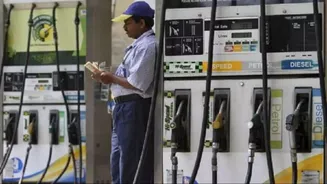








India's fuel sector has witnessed a major behavioral shift in the recent past with two key developments: one is the spike in petrol and diesel prices due
to the Iran War, and second is the introduction of higher ethanol blending with a view to reduce crude oil dependency. Due to the intensified Iran War, leading to blockage of Strait of Hormuz, the crude oil prices have witnessed significant jump and in order to meet the losses, government has increased the petrol and diesel prices for four times in less than two weeks of time. According to a report by KPMG, the ethanol blending has helped India save nearly Rs 1.67 lakh crore in foreign exchange, replace around 283 lakh metric tonnes of crude oil, avoid approximately 851 lakh tonnes of CO₂ emissions, and support rural incomes through the ethanol value chain.
How much oil does India really have?
Union Minister for Petroleum and Natural Gas, Hardeep Singh Puri said there was no shortage of energy in the country and the supply situation for crude oil, liquefied petroleum gas (LPG) and natural gas was comfortable.
"For example, if 80,000 metric tonnes of LPG were consumed daily, domestic production, which earlier stood at 32,000 metric tonnes per day, has now increased to 54,000 metric tonnes, helping reduce import dependence," the minister said.
He added that India currently has LPG stocks sufficient for 75-80 days. "We have a maximum stock of LPG which is 75-80 days of stock," he said.
On the price hike, minister Puri said oil prices rose across the world due to the Iran War.
Citing fuel-price data for May 2022 to May 2026, he said petrol prices rose by 70 per cent in Pakistan, 66 per cent in Sri Lanka, 47 per cent in France, 46 per cent in Italy, 36 per cent in Bangladesh and 35 per cent in the US.
The Ethanol push: Will Petrol prices fall?
Centre has extended central excise duty exemptions to petrol blended with 22 per cent, 25 per cent, 27 per cent and 30 per cent, ethanol.
According to a government gazette, for a 22% ethanol blended petrol that is a blend consisting, by volume, of 78% motor spirit, (commonly known as petrol), on which the appropriate duties of excise have been paid and of 22% ethanol on which the appropriate Central tax, State tax, Union territory tax or Integrated tax, as the case may be, have been paid.
Ravi Gupta, Chairman of the Sugar Ethanol Group at the Indian Federation of Green Energy, said, "The excise duty exemption on E22-E30 petrol is an important enabling reform that supports the next phase of India's ethanol blending journey after the country achieved the 20% blending target in December 2025. By removing the excise burden on higher ethanol blends, the government is creating a favourable policy framework for their future introduction and wider adoption."
"This move strengthens India's long-term energy security by encouraging greater use of domestically produced biofuels and reducing dependence on imported crude oil. According to government estimates the ethanol blending programme has already generated foreign exchange savings of over Rs 1.63 lakh crore and substituted more than 277 lakh metric tonnes of crude oil since 2014-15. As India increases the share of domestically sourced fuel in the energy mix, consumers stand to benefit from reduced exposure to global oil price volatility and potentially more stable fuel prices over the long term."