








New Delhi: The aviation ministry has given NOC to two upcoming airlines after the IndiGo crisis exposed the duopoly in the sector in the early December.
The move is seen as government's bid to invite more operators so that flyers have choices and keeps the sector away from monopoly. The government this week granted NOC to Al Hind Air and FlyExpress, Union aviation minister Ram Mohan Naidu said on X. “Over the last one week, met teams from new airlines aspiring to take wings in Indian skies — Shankh Air, Al Hind Air and FlyExpress. While Shankh Air has already got the NOC from Ministry, Al Hind Air and FlyExpress have received their NOCs in this week. It has been endeavour of the ministry to encourage more airlines in Indian aviation which is amongst the fastest growing aviation markets in the world owing to the policies of Modi government. Schemes like UDAN, has enabled smaller carriers Star Air, India One Air, Fly91 etc to play an important role in the regional connectivity within the country and there is more scope for further growth,” the minister's post read. Also Read: 'Indi-Stop'? Inside The Crisis That Left Indigo Staff And Passengers Stranded In Silence
Over the last one week, pleased to have met teams from new airlines aspiring to take wings in Indian skies—Shankh Air, Al Hind Air and FlyExpress.
While Shankh Air has already got the NOC from Ministry, Al Hind Air and FlyExpress have received their NOCs in this week.
It has… pic.twitter.com/oLWXqBfSFU— Ram Mohan Naidu Kinjarapu (@RamMNK) December 23, 2025
Notably, the aviation industry has urged the government to closely examine the reasons behind India having some of the highest airline operating costs in the world, with high jet fuel prices and taxes being the key concerns.
“In Indian aviation ecosystem, almost all stakeholders — barring airlines — make money. That’s why we keep seeing airlines regularly collapsing over the last three decades or even more. A new airline can be floated but the same remaining airborne due to several factors like high cost structure, taxes, lack of management bandwidth and thin funding is a big challenge,” a TOI report cited an industry veteran.
While airline failures are a global phenomenon and not unique to India, industry executives say the situation is more worrying domestically because of the cost-unfriendly operating environment.
“Flying is no longer a luxury and the dream that it remain in the reach of the common man makes it mandatory to have cost and tax rationalisation,” said a senior airline official.
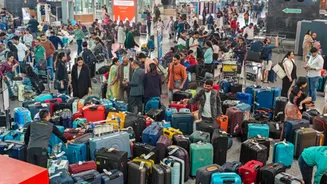
In December 2025, IndiGo, India’s largest airline, faced a major operational meltdown, cancelling around 4,500 flights over 10 days. The disruption peaked on December 5, when more than 1,600 flights were cancelled in a single day, stranding nearly 11 lakh passengers across the country. The airline failed to adequately prepare for new Flight Duty Time Limitation (FDTL) norms mandated by the DGCA to prevent pilot fatigue.