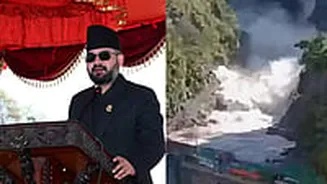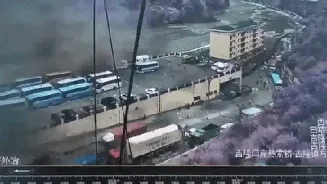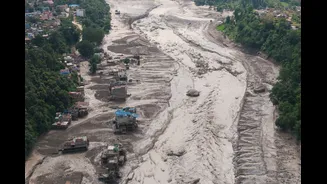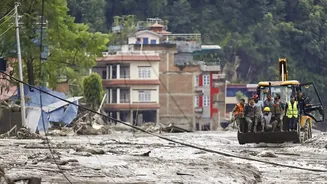





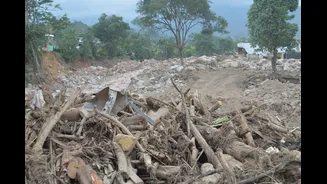


Kathmandu: Rescue and relief operations in Nepal have been halted after a dam reportedly burst in Tibel, creating panic in the flood-ravaged Himalayan
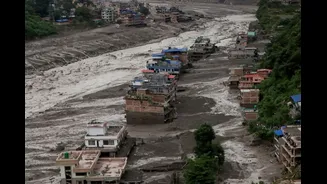
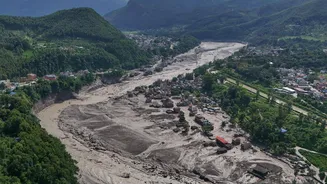
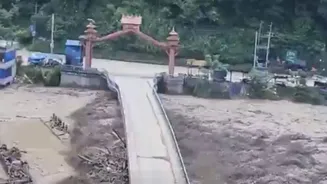
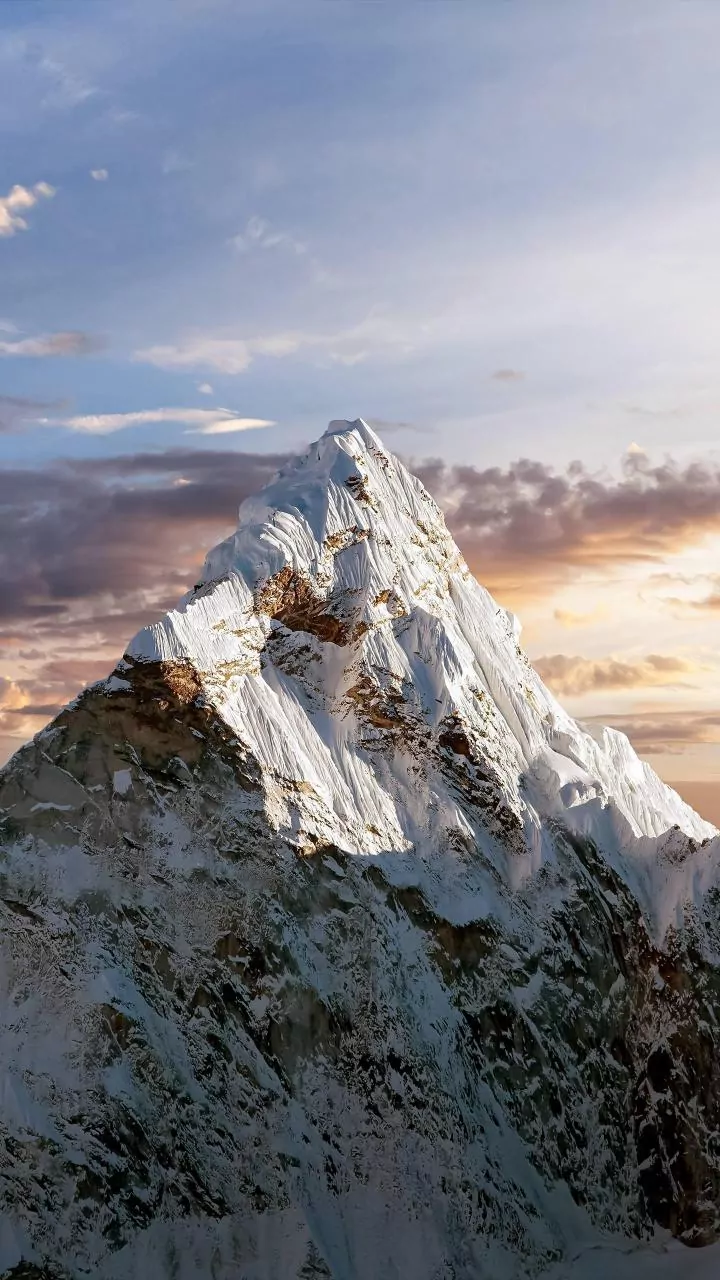
nation. The Nepal Police in an advisory asked rescuers to stop all operations for some time and directed them to move to safe locations. Authorities in Nepal paused rescue efforts for the next 90 minutes, according to the Army.. China also suspended rescue operations in Gyirong County earlier, citing “real possibility” of another major landslide or flood. The death toll in the Nepal floods climbed to 475, with over 1,400 people still missing. Notably, among the missing 288 are Indians. The flash floods were caused after a huge ice-and-rock avalanche near Nepal’s Tibet border triggered a powerful torrent carrying water, debris, and large rocks through river channels, with levels reportedly rising by up to nine metres within half an hour. A large portion of the settlement, where hundreds lived, was washed away before the floodwaters moved downstream. With no rain recorded locally, residents had little warning and were caught off guard while carrying out their daily activities. According to the National Disaster Risk Reduction and Management Authority (NDRRMA), 178 bodies — recovered in Chitwan district, followed by 110 in Nawalparasi East. Likewise, 44 bodies were recovered in Gorkha, 37 in Nuwakot, 28 in Tanahun, 27 in Nawalparasi West, 23 in Dhading and 12 in Rasuwa. Nepal sits along the tectonic boundary where the Indian and Eurasian plates collide. Converging at around 40–50 mm annually, the plates make the Himalayan region highly prone to seismic activity, according to the US Geological Survey (USGS). Among those out of contact, 127 Nepalis residing abroad are also missing, according to the authority. The constant movement of the tectonic plates generates immense geological stress. When released through earthquakes, that energy can trigger destruction far beyond the initial tremors. The 7.8-magnitude Gorkha earthquake in 2015 claimed nearly 9,000 lives and set off thousands of landslides and avalanches across Nepal. Nepal’s mountainous landscape is vulnerable to cascading disasters, where earthquakes can trigger landslides, block rivers and cause sudden floods carrying huge volumes of water and debris downstream.