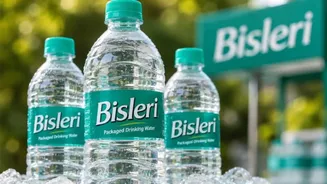





A day after Food Safety and Standards Authority of India (FSSAI) sanctioned prosecution against Bisleri International, as it found its sample of packaged
drinking water "unsafe", a government source said samples from all companies will now be tested apart from more Bisleri samples from across the nation, Reuters reported. Bisleri competes with PepsiCo's Aquafina and Coca-Cola's Kinley in India's packaged drinking water market, valued at $3.6 billion in 2025, according to Persistence Market Research. "Drinking water safety is a priority for Bisleri. We maintain stringent quality controls," Bisleri said, adding it will cooperate with the regulators. The eponymous brand Bisleri, introduced in India in 1965, is a household name in the country where poor water quality often prompts people and tourists to buy packaged water both for homes and at restaurants.
Bisleri Recalls Batches
A second government source said the batches linked to the unsafe sample had been recalled, and subsequent testing of products showed no issues with water quality.
The sample, collected from Bisleri's premises, did not meet prescribed limits on bromate, a chemical formed as a by-product of certain disinfection processes, the FSSAI said in a social media post on Sunday.
After Bisleri appealed the finding, the government regulator still found the sample unsafe but instead said it had detected polynuclear aromatic hydrocarbons, or PAHs, the FSSAI said.
PAHs are of serious public health concern due to their toxic, mutagenic, and carcinogenic properties, according to research published last year on the National Library of Medicine's PubMed database. Some individuals who ingested high concentrations of bromate experienced kidney problems and hearing loss, according to the New York health department, though they were exposed to levels many thousands of times higher than the drinking water standard.
What Bisleri Said on Bromate Levels
Bisleri said in its statement that the sample collected from its Goa facility last year showed bromate levels of 12 micrograms per litre against the prescribed limit of 10 micrograms per litre, but further independent testing arranged by the company showed the chemical was within prescribed limits.
India's food regulator has stepped up enforcement against major brands this year, including legal action against Nestle over a baby food sample it found substandard in September.
With inputs from Reuters