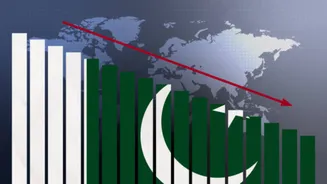

Pakistan’s private sector is grappling with a growing loss of competitiveness as production and operating costs surge far beyond regional benchmarks, raising
fresh concerns over the country’s export prospects and economic direction. According to the Pakistan Business Forum (PBF), businesses in Pakistan now face costs that are roughly 34 per cent higher than those borne by firms in neighbouring economies like China, Iran and India. This widening gap, industry leaders warn, is eroding Pakistan’s ability to compete in global markets and undermining trade performance. Rising Costs And Policy Missteps PBF Chief Organiser Ahmad Jawad has linked the situation squarely to structural policy weaknesses. As reported by The Express Tribune, Jawad pointed to a combination of high taxation, expensive power tariffs and currency instability as key drivers of the cost escalation. He argued that exporters are steadily losing ground to regional rivals, a trend reflected in Pakistan’s lacklustre export growth since 2022. Addressing the media, Jawad called on the government to urgently overhaul the tax system, reduce electricity and gas prices for industry, and adopt a clear plan to stabilise the rupee. Currency Volatility Weighs On Confidence Reiterating PBF’s stance on exchange-rate management, Jawad said the rupee should remain close to Rs 240 per US dollar to provide predictability for businesses. A stable currency, he maintained, would help contain inflation, lower the cost of imported inputs and allow exporters to price contracts with greater certainty. He warned that persistent currency swings have discouraged long-term investment and weakened confidence across the business community. According to Jawad, repeated devaluations over the past six years, during which the rupee has fallen by nearly Rs160 against the dollar, have driven up production costs and fuelled inflation, a development he attributed to weak economic governance rather than market forces alone. While the rupee has shown signs of relative stability in recent months, Jawad cautioned that low foreign exchange reserves leave the currency exposed to renewed pressure, as cited by The Express Tribune. Cotton Sector Feels The Strain The broader crisis has also engulfed Pakistan’s cotton industry. PBF South and Central Punjab Chairman Malik Talat Suhail disclosed that over 400 cotton ginning units have shut down, disrupting supply chains and dealing a blow to farmers, ginners and textile manufacturers. He said the introduction of an 18 per cent general sales tax on locally produced cottonseed and oil cake has pushed up costs and dampened demand for domestic cotton, further weakening an already stressed sector, according to The Express Tribune.