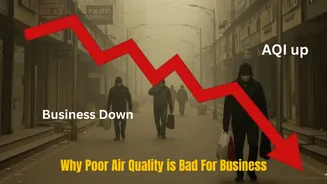

Large retailers and restaurant chains are, for the first time, openly attributing weaker December-quarter performance in North India to persistently high
air pollution levels, which kept consumers indoors and dented footfalls across key markets such as Delhi-NCR, said an ET report. Executives across sectors said elevated air quality index (AQI) readings—often in the “very poor”, “severe”, and even “severe+” categories—had a direct impact on shopping and dining behaviour, adding a new weather-linked risk to corporate earnings. Retail Footfalls Hit by Smog Shoppers Stop managing director Kavindra Mishra told analysts that the company’s sales remained flat in the October–December quarter, with pollution in northern India emerging as a key drag. “The high pollution levels directly impacted footfalls,” he said, adding that the impact was compounded by certain festivals shifting to the September quarter and uneven discretionary demand. High AQI levels typically discourage outdoor movement, hitting open high-street markets harder than enclosed malls. Lifestyle International echoed similar concerns, with CEO Devarajan Iyer noting that footfall and sales growth in the North lagged the rest of the country, possibly due to pollution. While companies did not disclose exact numbers, industry executives estimate business in the region was down by 3–6 percentage points compared with other parts of India. Restaurants See Sharper Impact Restaurant chains reported a much steeper divergence. Speciality Restaurants, which operates brands such as Mainland China and Oh! Calcutta, said dine-in business in North India fell nearly 20% year-on-year in the December quarter, even as it grew 7–8% in the rest of the country. “Dine-in is all about happiness, which is robbed by the pollution in the North, with schools and offices often working from home,” said managing director Anjan Chatterjee to ET. While deliveries rose 7–8% following aggressive promotions on food delivery platforms, higher aggregator commissions meant the increase failed to offset lost dine-in revenue. The weakness, he added, has continued into January. A founder of a large Gurugram-based restaurant chain said cold waves and elevated AQI levels particularly hurt open-air dining formats. “Deliveries increased about 15%, but that wasn’t enough to compensate for the drop in overall footfalls,” the executive said. A Broader Weather Pattern Delhi-NCR has dominated pollution headlines this winter, with AQI levels crossing 500 multiple times, prompting the highest level of emergency measures by authorities and intervention by the Supreme Court. The impact adds to a series of weather-related disruptions faced by businesses in recent years—milder summers affecting seasonal sales, erratic monsoons, and a delayed winter across much of India. Not all sectors fared equally. Shoe and outdoor gear maker Woodland said a stronger winter supported growth in North India, though footfalls remained muted. Managing director Harkirat Singh noted that dense evening fog may have discouraged shoppers from venturing out. Overall, executives say the December quarter underscored how environmental factors—especially air pollution—are increasingly shaping consumer behaviour and corporate performance in North India, turning smog into a material business risk rather than just a public health concern.