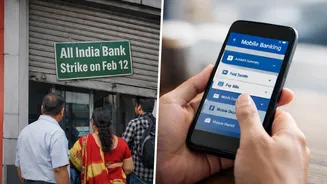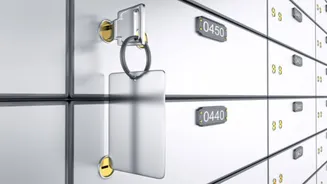

The importance of a small metal key only becomes clear when it goes missing. What follows is rarely a simple exercise. The same goes for bank lockers.
When a bank locker key is lost, the customer is drawn into a process that involves paperwork, verification, costs, and, in some cases, prolonged waiting at the branch level. Banks follow a dual-control system for lockers, where access depends on both the customer’s key and the bank’s master mechanism. When a customer loses the key, that balance breaks, as banks do not have a spare customer key. What Should You Do When You Lose Your Key? Your immediate step should be to inform the bank formally. Most banks insist on a written intimation to the branch to record the incident and prevent any misuse. Customers may also be asked to submit an indemnity or lodge a police complaint, depending on the bank’s policy. As per the RBI Master Direction (RBI/2021-22/86), the customer has a statutory right to a transparent “break-open” procedure. “Upon the loss of a key being reported, the bank is mandated to issue an acknowledgement and schedule the lock-breaking process in the presence of the customer and independent witnesses,” said Prerna Robin, Principal Associate, B. Shanker Advocates, according to a Moneycontrol report. The customer’s access to the locker is restored only after the bank decides to break open the existing lock and install a new one. This is a time-consuming exercise as banks usually fix a date, arrange a technician, and require the locker holder and all joint holders, if applicable, to be present. The process is documented, and in some cases, an inventory of the contents may be prepared to prevent any further disputes. Tushar Kumar, Advocate, Supreme Court of India, weighed in on this matter, “While the RBI does not stipulate a rigid timeline for completion of the break-open process, the regulatory scheme emphasises promptness, transparency and procedural discipline, leaving little scope for arbitrary inaction.” Who Bears The Cost? While from a legal standpoint, the financial cost of breaking open the locker and replacing the lock rests with the customer, the responsibility for the process and the consequences lies squarely with the bank. When Can Banks Deny Locker Access? Banks can only deny access in a specific set of circumstances: “The customer’s failure to sign the revised locker agreement as mandated by RBI regulations, the non-payment of locker rent or related fees, or the existence of a formal court order or legal restraint, according to Alay Razvi, Managing Partner, Accord Juris, as stated in the report. What Should You Do Once Access Is Restored?
- Keep the new key in a place that is secure and easy for you to remember.
- Opt for a locker with digital or biometric authentication if your bank provides this option.
- To prevent any ownership or claim-related disputes, maintain an updated inventory of locker contents.