





What is the story about?
BERLIN (AP) — Individuals with disabilities encounter various barriers in tourism, ranging from obvious issues like broken elevators to subtle challenges
such as overly lengthy outings or noisy environments. As the baby boomer generation ages, the travel industry is increasingly focused on accommodating older adults who often require additional assistance. Truly inclusive accessibility, however, addresses a broader spectrum of tourists, including those with physical disabilities, autism, or dementia.
Cultural Institutions Adapting to Needs
To enhance the experience for visitors with visible or invisible disabilities, museums and cultural institutions worldwide are introducing specialized guides and barrier-free tours, leveraging advances in technology.These initiatives include sign-language tours for the deaf or hard of hearing, tactile events for individuals with blindness or low vision, and programs tailored for those on the autism spectrum. Additionally, tourism agencies focusing on serving disabled travelers have emerged.
A Welcoming Environment
Offering barrier-free tours communicates to individuals with disabilities that they are welcome in cultural spaces, according to Ashley Grady, an accessibility program specialist at the Smithsonian Institution.Grady emphasized that such services convey, “we’ve thought of you. We want you to come to our museums. We want you to see yourselves reflected in our staff and our collections. And we want to make these programs as accessible as possible for you, your family, your loved ones, your friends.”
Addressing Remaining Gaps
Despite advancements, gaps persist. Ivor Ambrose, managing director of the European Network for Accessible Tourism, highlighted a continuous lack of awareness regarding the varying levels of accessibility needed by travelers.Ambrose noted, “This is actually a really big market and an opportunity, which is still not fulfilled by the operators in all these different areas of tourism.”
Planning Ahead for Accessibility
Josh Grisdale, founder of Accessible Japan, emphasizes the importance of thorough research before traveling. He suggests utilizing platforms like Reddit and YouTube to gather information on accessibility, even if the content creator does not require accommodations.Grisdale advises contacting hotel concierges to inquire about accessibility options and highlights that most cultural institutions provide written guides detailing their barrier-free offerings.
He also established tabifolk, a platform that crowdsources information on accessible travel, aimed at reducing the stress of planning trips for individuals with disabilities.
“Even though I’m in a wheelchair and I've had a disability my whole life, there are things that I don’t know about other disabilities,” he remarked.
Expert Guidance in Diverse Regions
In Africa, proper planning is crucial for individuals with disabilities to enjoy experiences such as safaris or climbing Mount Kilimanjaro, according to Joanne Ndirangu, director of the accessible tourism agency Scout Group Agency.Ndirangu advocates for collaboration with local travel agents or trained experts who understand the region's accessible options. She provides tailored advice to travelers, ensuring they can enjoy their desired activities while considering accessibility challenges.
“Let’s say you want to see giraffes somewhere,” Ndirangu explained. “I can now advise you, ‘That place is not viable if you’re on a wheelchair or on crutches because of the hills and the valleys.’ So I can give you an alternative — and you get to see the giraffes.”
Specialized Programming for Inclusion
General public tours may not cater effectively to individuals with disabilities due to various factors such as exhibit heights or noise levels.The Smithsonian Institution offers sensory-friendly programs like “Morning at the Museum,” allowing neurodivergent participants and their families to visit museums in a controlled environment before public opening hours.
Grady stated, “We can control the environment, we can reduce the crowds. It’s a completely judgment-free environment and one that’s really meant to hopefully be that full bridge to inclusion.”
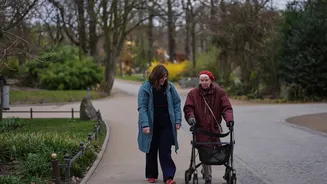
In Berlin, Malteser Deutschland, a Catholic aid organization, has developed barrier-free tours for individuals with dementia at various cultural sites, ensuring a manageable experience tailored to their needs.
Encouraging Communication and Feedback
Ndirangu’s team is trained to inquire about visitors' accommodation needs upfront to provide the best options available. However, she noted the challenges of addressing unknown requirements in advance.“Give us that opportunity to give you solutions,” she said. “We’ve had guests who don’t mention anything.”
The European Network for Accessible Tourism advocates for travel companies to incorporate the costs of providing barrier-free services into their overall programming, making these options available to all participants.
Grady indicated that the Smithsonian has adapted its offerings based on participant feedback and advisory group insights, ensuring accessibility is prioritized in future exhibitions.
“They’re not asking for anything out of the ordinary,” she said. “They’re literally just trying to experience a visit just like anyone else.”