





What is the story about?
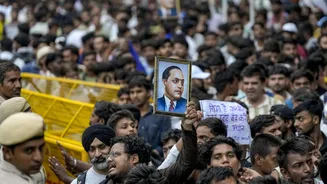
New Delhi: The violence that erupted during the Cockroach Janta Party's (CJP) 'Sansad Chalo' march on Monday was the culmination of nearly a month of protests
over the alleged NEET-UG 2026 paper leak, activist Sonam Wangchuk's indefinite hunger strike, court intervention over his deteriorating health and a political showdown between the Opposition and the Centre. Here's a chronological look at how the protests escalated .
June 28: Sonam Wangchuk Begins Indefinite Hunger Strike
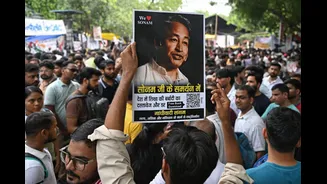
Activist and educator Sonam Wangchuk begins an indefinite hunger strike at Delhi's Jantar Mantar in support of the CJP-led movement over the alleged NEET paper leak. Besides examination reforms, he also raises issues related to Ladakh.
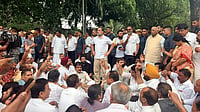
Hundreds of students and supporters join the protest, demanding transparency, accountability and action against those responsible for the alleged paper leak.
June 29–July 10: Student Protest Gathers Momentum
The agitation initially remains largely student-driven with modest crowds.
Wangchuk regularly posts video messages appealing for education reforms and transparency in competitive examinations. As his fast continues, his health steadily deteriorates, while public participation at Jantar Mantar gradually increases.
July 11–15: Health Worsens, Political Attention Grows
By the second week of July, Wangchuk has lost significant weight and doctors begin issuing warnings about his health.
Political leaders from different parties start visiting Jantar Mantar, turning what began as a student protest into a major political issue.
On July 15, a Public Interest Litigation is moved before the Delhi High Court seeking judicial intervention to monitor Wangchuk's health.
July 16: Delhi High Court Steps In
The Delhi High Court directs authorities to do "anything and everything" necessary to protect Wangchuk's life after hearing concerns over his rapidly deteriorating condition.
The court questions the lack of adequate medical monitoring and emphasises that the State cannot remain a silent spectator.
July 17: Parliament March Announced
On the 20th day of his hunger strike, Wangchuk says he will "stay alive at any cost" until Parliament reconvenes for the Monsoon Session.
He announces that protesters will undertake a peaceful 'Sansad Chalo' march to press their demands, including action over the NEET paper leak.
Doctors, meanwhile, warn that prolonged fasting could begin affecting his organs.
July 18: Wangchuk Removed From Protest Site
In the early hours, Delhi Police removes Wangchuk from Jantar Mantar and shifts him to Safdarjung Hospital, citing an urgent medical emergency after doctors warn of possible organ failure.
Police also ask protesters to vacate the protest site.
The move sparks anger among supporters, who accuse the administration of trying to weaken the movement.
July 18–20: Protest Intensifies
Despite Wangchuk's hospitalisation, the CJP announces that the agitation will continue.
Supporters begin mobilising for a massive march to Parliament on the first day of the Monsoon Session, demanding:
Resignation of Union Education Minister Dharmendra Pradhan
Action over the alleged NEET paper leak
Wangchuk's release from hospital
Compensation for families of students allegedly driven to suicide after the paper leak controversy
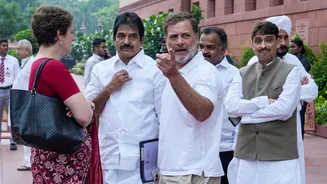
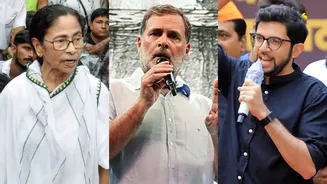
Meanwhile, Opposition leaders extend support to the movement, further raising its political profile.
July 20: The Day the Protest Turned Violent
- 6:00 AM: Supporters begin arriving at Jantar Mantar in large numbers, with the protest site filling up hours before the planned march to Parliament.
- 9:00 AM: The 'Sansad Chalo' march is scheduled to begin but is delayed as organisers wait for Sonam Wangchuk, who is seeking discharge from Safdarjung Hospital so he can join the procession.
- 9:00 AM–12:00 PM: CJP leaders, student representatives and Opposition politicians address the gathering, reiterating their demands over the alleged NEET paper leak and calling for accountability.
- Around Noon: Wangchuk's wife informs protesters that Opposition MPs have assured the delegation their demands will be raised in Parliament. Following the announcement, CJP founder Abhijeet Dipke and three AISA activists call off their indefinite hunger strike.
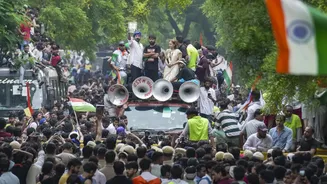
- 1:00 PM Onwards: CJP leaders board a truck fitted with loudspeakers and formally begin the 'Sansad Chalo' march. The procession reaches near Kerala House, around 500 metres from Jantar Mantar, where it is met with heavy security deployment, including Delhi Police, RAF personnel, seven-foot metal barricades, water cannons and anti-riot vehicles.
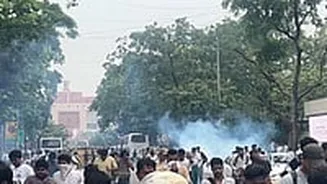
- As protesters attempt to push ahead, clashes break out. Demonstrators breach barricades at several locations, including Bank of Baroda, LIC Building in Connaught Place, Rail Bhavan, Akashvani Bhavan, Shram Shakti Bhavan, Transport Bhavan and Air Force Bhavan. Police respond with repeated lathi-charges, tear-gas shells and loudspeaker warnings to disperse the crowd.
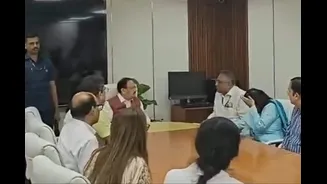
- Around 3:30 PM: Amid the unrest, a CJP delegation meets Union Health Minister JP Nadda and submits a memorandum listing three key demands - compensation for families of students who allegedly died by suicide after the NEET paper leak, resignation of Union Education Minister Dharmendra Pradhan and the release of Sonam Wangchuk.
- Around 4:00 PM: Police climb onto the protest truck after smashing one of its window panes and detain several protesters, further escalating tensions.
- Till Evening: Protesters continue trying to march towards Parliament despite repeated police action. They allege they were beaten by security personnel, while Delhi Police says two of its personnel were injured in stone-pelting.
- Authorities tighten security across central Delhi by closing Parliament gates, imposing prohibitory orders under Section 163 of the BNSS, suspending mobile internet services in parts of Lutyens' Delhi and shutting entry and exit gates at Janpath, Rajiv Chowk, Patel Chowk, Central Secretariat and Seva Teerth Metro stations.
- Around 6:30 PM: Abhijeet Dipke, Wangchuk's wife and other CJP leaders remain atop the stranded truck, declaring that the protest will continue until Union Education Minister Dharmendra Pradhan resigns.
What Happened Next?
The violence during the 'Sansad Chalo' march triggered a fresh political confrontation.
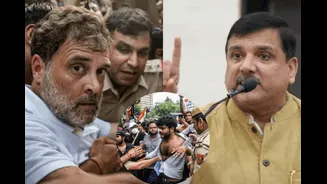
The BJP accused the Opposition of exploiting students and choosing "political spectacle" over parliamentary discussion, while the Congress blamed the government for failing to address students' concerns.
Amid the ongoing protest, Prime Minister Narendra Modi called the NEET paper leak a "ghor paap (grave sin)" and assured strict action against those responsible for "playing with the future of youth".
The remarks were made during the NDA Parliamentary Party meeting and were later shared by Union Parliamentary Affairs Minister Kiren Rijiju.
Briefing reporters after the meeting, Rijiju said the Prime Minister stressed that "NEET paper leak should not be an issue of partisan politics" as it is "a national issue and not a matter of one state or the Centre alone".
According to Rijiju, PM Modi also reiterated that the "security and future of youth" remains the government's top priority and assured that those responsible for the paper leak would face stringent action.
The BJP has repeatedly maintained that Parliament was the appropriate forum to discuss the NEET controversy.