







What is the story about?
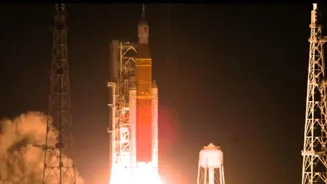
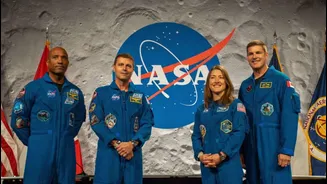
CAPE CANAVERAL, Fla. (AP) — NASA is preparing for humanity's first lunar mission in over 50 years as four astronauts are set to launch on the Artemis II
mission. This mission, which aims to orbit the moon, will showcase the differences between the historic Apollo program and the modern Artemis initiative, reflecting a more inclusive representation in space exploration.
Historical Context
The Apollo program achieved remarkable milestones, including the 1969 landing of Apollo 11, which marked a significant victory for the United States in the space race.“The Apollo program still just absolutely blows me away,” said Artemis II astronaut Jeremy Hansen from the Canadian Space Agency.
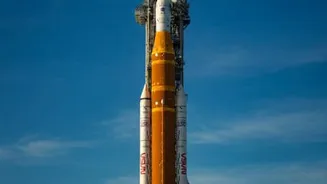
In contrast, the Artemis program has faced delays due to indecision over its goals, with NASA's Space Launch System (SLS) only having completed a single uncrewed test flight more than three years ago.
To accelerate progress, NASA's new administrator, Jared Isaacman, has restructured the Artemis program to include a mission prior to the planned moon landing, now scheduled for Artemis IV in 2028.
Competition in Space
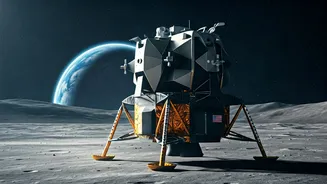
While the United States faced the Soviet Union during the Apollo era, the current competition comes from China, which aims to land astronauts on the moon's south pole by 2030.NASA is also targeting this region, where it is believed that shadowed craters may contain significant amounts of ice, potentially useful for future missions.
Isaacman emphasizes the importance of beating China in this renewed space race, echoing sentiments from his predecessor, Bill Nelson.
Technical Innovations
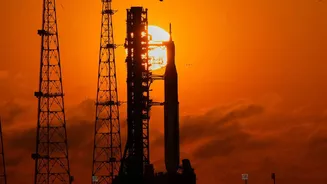
Apollo's Saturn V rockets were iconic, standing at 363 feet tall, while the Artemis SLS measures 322 feet but offers greater thrust with its four main engines and two strap-on boosters.NASA plans to utilize Launch Complex 39-B for the SLS, a site historically associated with Apollo launches. The SLS has faced multiple delays due to technical issues, including hydrogen fuel leaks.
April is now the targeted timeframe for the Artemis II launch, with Charlie Blackwell-Thompson serving as the first female launch director at Kennedy Space Center.
Mission Objectives
Apollo 8 is regarded as one of the most daring missions in space history, marking the first time humans orbited the moon in 1968.NASA has determined that Artemis II will not attempt lunar orbit due to safety concerns, focusing instead on testing the Orion capsule's life-support systems.
“If we can contribute a little bit to hope for humanity,” said Artemis II pilot Victor Glover, “that is a huge thing.”
Journey to the Moon
The Artemis II crew will first orbit Earth for a day before initiating their journey to the moon, which will take approximately three to four days.Using a free-return trajectory, similar to Apollo 13, the mission will allow the crew to utilize gravity assists for their return to Earth, with a planned landing in the Pacific Ocean.
Spacesuit Developments
For Apollo missions, astronauts wore bulky white suits for both launch and lunar walks. The Artemis program features larger Orion capsules capable of carrying four astronauts, along with specialized suits for different mission phases.Commander Reid Wiseman and his crew will don orange suits during launch, which are designed for emergencies and can sustain the crew for several days if needed.
Future moonwalking suits are being developed by Houston-based Axiom Space, enhancing the capabilities for Artemis crews.
Future Aspirations
The Apollo missions focused primarily on national pride and competition, achieving six successful landings between 1969 and 1972.In contrast, Artemis aims for sustained lunar habitation, with the first landing allowing astronauts to remain for nearly a week.
NASA plans to invest $20 billion over the next seven years to develop infrastructure for lunar living, with Mars as the next target.