





Iranian politicians are moving to withdraw the country from the Treaty on the Non-Proliferation of Nuclear Weapons (NPT) as U.S. and Israeli attacks intensify,
targeting nuclear facilities, industrial sites and infrastructure. Ebrahim Rezaei, spokesperson for parliament’s national security commission, said remaining in the treaty “has had no benefit for us” in a post on X late Friday. Malek Shariati, a lawmaker from Tehran, said draft legislation has been submitted and will be reviewed soon. Parliament has not met since the war began on February 28. According to Shariati, the proposed law would withdraw Iran from the NPT, repeal restrictions tied to the now-defunct 2015 nuclear deal, and support a new agreement with aligned countries, including BRICS and the Shanghai Cooperation Organization, focused on peaceful nuclear development, reports Al Jazeera.
Hardliners in Iran have repeatedly called for leaving the treaty and pursuing nuclear weapons in response to external pressure. Any such legislation would require approval from parliament and the Guardian Council before implementation.
Iranian officials also accused the International Atomic Energy Agency (IAEA) of bias, alleging it has enabled attacks on Iranian nuclear facilities. The U.N. watchdog has rejected those claims.
Mohammad Mokhber, a senior adviser to the late Supreme Leader Ayatollah Ali Khamenei, said IAEA Director Rafael Grossi is a “partner in crime” in the ongoing conflict and earlier clashes, reports Al Jazeera.
“His political reports about Iran’s peaceful nuclear activities, lack of condemnation for aggression against our nuclear facilities, and now encouraging the enemies to attack Iran’s nuclear sites, will bring the country to irrevocable decisions,” he warned, without elaborating.
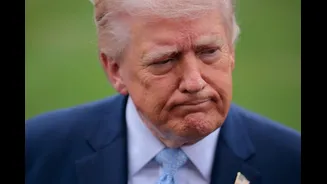
Fada-Hossein Maleki, another member of the national security commission, accused Grossi of acting as an “agitator” to please U.S. President Donald Trump, calling his remarks about nuclear war “a provocative act.”
Grossi told US broadcaster CBS News in an interview earlier this month that no conventional war could completely destroy Iran’s nuclear program, adding that only nuclear war could achieve that, “which we hope will never be the case.”
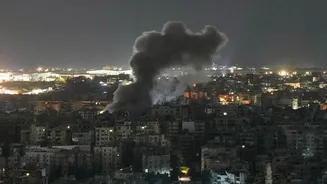
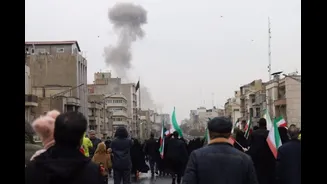
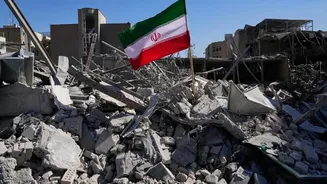
Meanwhile, U.S. and Israeli strikes have intensified, hitting key economic infrastructure. Targets included a yellowcake facility in Yazd and the Khondab Heavy Water Complex near Arak. Projectiles also landed near the Bushehr nuclear power plant, raising concerns about a potential radiological incident.
Major steel plants in Isfahan and Ahvaz were also struck, forcing production shutdowns. The facilities are central to Iran’s non-oil exports, and damage could affect thousands of jobs.
The attacks come despite Trump delaying planned strikes on Iran’s power plants until April 6, while saying negotiations with Tehran are “going very well.”
Among recent targets was the Iran University of Science and Technology in Tehran. Officials said research and educational buildings were damaged, but no casualties were reported. Additional strikes were reported in several cities, including Karaj, Shahr-e Rey, Yazd, Shiraz, Tabriz and Bushehr.