







What is the story about?
Phnom Penh: UNESCO has expressed deep concern over the escalating conflict between Cambodia and Thailand. The organisation warned that the renewed tensions
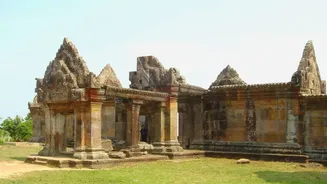
between the states threaten cultural heritage in the border region, including the UNESCO World Heritage site Preah Vihear Temple. In a statement issued on Wednesday, UNESCO called for urgent protection of the region’s cultural heritage in “all its forms”. The UN body reminded all parties involved in the clash of their obligations under international laws, notably the 1954 Hague Convention for the Protection of Cultural Property in the Event of Armed Conflict and the 1972 World Heritage Convention.
What are the International Laws Evoked by UNESCO?
The 1954 Hague Convention for the Protection of Cultural Property in the Event of Armed Conflict is a global treaty that focuses solely on the protection, safeguarding, respect and preservation of cultural heritage during an armed conflict. It puts forth peacetime measures, prohibits destruction and suggests measures for the protection of crucial sites, addressing both state and non-state actors.
The 1972 World Heritage Convention links the preservation of cultural properties with nature conservation, suggesting a congruence between both processes.
“UNESCO will continue to monitor the situation of cultural heritage in the region, with a view to ensuring its protection,” the organisation said.
They further declared that their preparation to offer technical support and emergency safeguarding measures to the area "as soon as conditions allow". This statement follows reports of escalating conflicts between Thailand and Cambodia.
https://youtu.be/lIUeuagj9ow?si=LYoPlScOhuBkjKDT
What is the Status of Thailand and Cambodia’s Conflict? Both South East Asian nations have accused each other of violating international law and reigniting the conflict. Clashes on Wednesday took place on over a dozen locations along the contested border, where dozens were reported dead on both sides. Cambodia’s Ministry of the Interior stated that civilian areas, comprising schools, residences, roads, Buddhist pagodas and ancient temples had been damaged by “Thailand’s intensified shelling and F-16 air strikes targeting villages and civilian population centres up to 30km (18.6 miles) inside Cambodian territory”. “It should be noted that … these brutal acts of aggression of the Thai military indiscriminately opened fire targeting civilian areas, especially schools, and further destroyed Ta Krabey and Preah Vihear temples, the highly sacred cultural sites of Cambodia and the world cultural heritage,” the Ministry said. The ministry added that, as of Wednesday, the death toll on the Cambodian end has risen to 10 civilians, including an infant, while 60 people have been injured. On cultural heritage, the Thai army stated that, “Cambodia intentionally used the ancient site for military operations, as a base to attack Thailand, and deliberately undermined the protection of the ancient site. Thailand retaliated as necessary”.
Why is the Preah Vihear Temple at the Centre of the Conflict?
The Preah Vihear Temple, situated on the cliffs of the Dângrêk mountains along the natural border of Cambodia-Thailand. The Khmer Hindu temple, built in the 11th and 12th centuries is dedicated to Lord Shiva, and is known for its religious significance and the remarkable quality of its carved stone ornamentation.
The temple has long served as the flashpoint of the conflict between the two nations. The crisis goes back to the Franco-Siamese treaties of 1904 and 1907, which demarcated the boundary between Siam (Thailand) and French Indochina (modern-day Cambodia, Vietnam and Laos). While the borders were sketched along the Dângrêk ranges, the territories defined by this treaty remained unclear on the ground. Cambodia was awarded sovereignty over the region in 1962 by the International Court of Justice, but the dispute continues in the absence of a mutually accepted border.