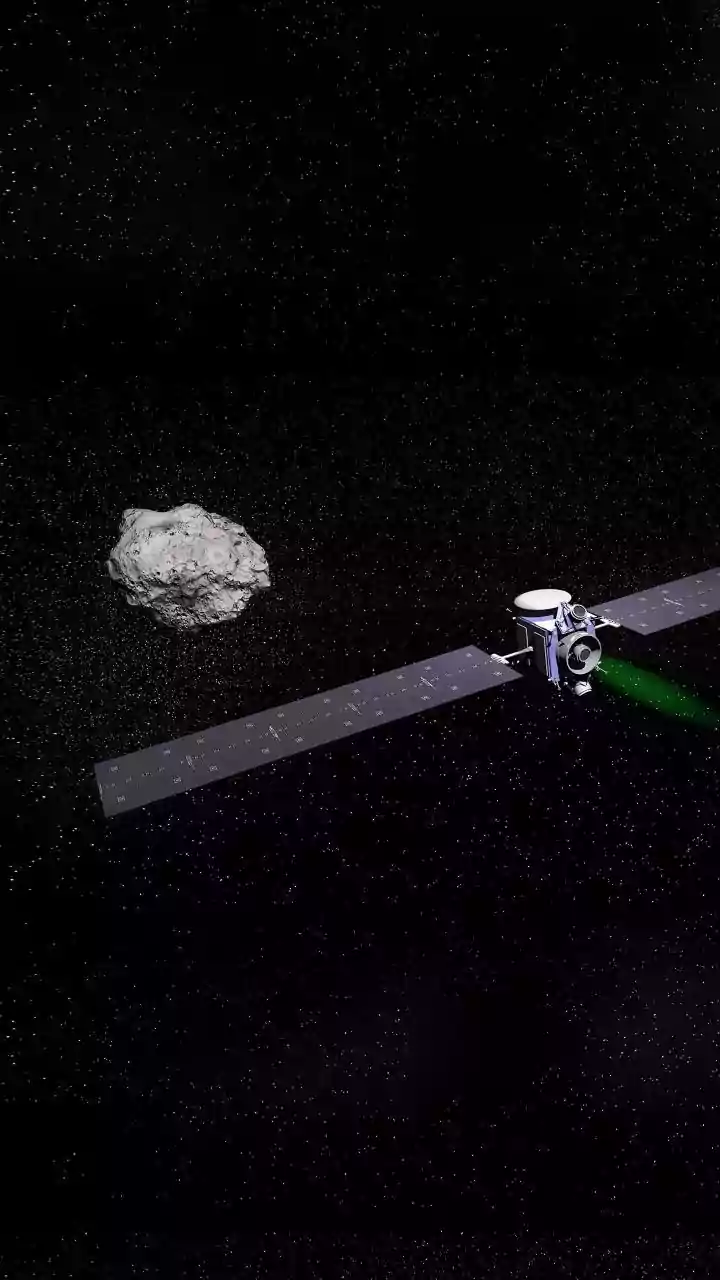
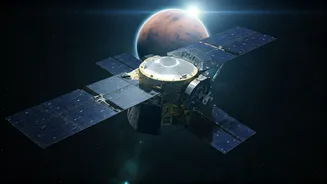
CAPE CANAVERAL, Fla. (AP) — NASA's Psyche spacecraft is performing a flyby of Mars this week, utilizing the planet's gravity to accelerate towards a unique
metal-rich asteroid. This maneuver is part of a larger mission set to culminate in 2029. The robotic explorer, named after the asteroid it aims to study, will pass Mars at a speed of 12,333 mph (19,848 kph) on Friday, coming within 2,800 miles (4,500 kilometers) of the planet's surface.
Close Encounter with Mars
Psyche's close approach to Mars is significant, as it allows the spacecraft to gather data while preparing for its primary target, the asteroid belt located between Mars and Jupiter. This asteroid is believed to be composed primarily of nickel and iron, making it a rare object of study.
Scientific Instruments Activated
During this flyby, all of Psyche's scientific instruments will be operational. Concurrently, NASA's two Mars rovers and a variety of U.S. and European orbiters will also conduct observations of Mars’ surface and atmosphere, facilitating comparative analysis.
Photography of Mars
The spacecraft's cameras are already capturing images of Mars, which will appear as a crescent during approach and transition to a nearly full sphere as it moves away. These images will not only assist mission operators in fine-tuning instruments but will also provide aesthetically pleasing photographs, according to Jim Bell, the imaging team leader at Arizona State University.
Understanding the Psyche Asteroid
Scientists theorize that Psyche could represent the exposed core of a primordial planet that suffered from cosmic collisions. Studying this asteroid could yield insights into the early solar system, particularly regarding the conditions that led to the emergence of life on Earth.
Mission Timeline and Technology
Launched in 2023, the Psyche spacecraft is on a six-year journey to reach the asteroid, which lies three times farther from the sun than Earth. The spacecraft is expected to enter orbit around the asteroid in 2029, where it will conduct two years of detailed study. It operates on solar electric propulsion, utilizing xenon gas thrusters for maneuvering.