






Nagaland has recorded a literacy rate of 95.7 per cent, making it the third most literate state in India after Kerala and Mizoram, according to state Advisor
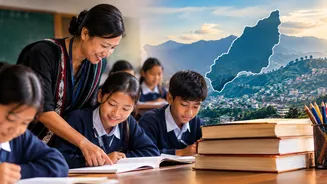
for School Education and SCERT, Dr Kekhrielhoulie Yhome. Speaking at the state-level Teachers' Day celebration in Kohima on September 5, Yhome credited the state's teachers for playing a central role in bringing about the transformation in education. As reported by PTI, Yhome recalled that Nagaland's literacy rate stood at just 21.95 per cent when the state attained statehood in 1963. He described the rise to 95.7 per cent as a major achievement and said the progress would not have been possible without the sustained efforts of teachers. He said around 32,714 teachers working across government and private schools are currently involved in educating children across the state. Yhome also acknowledged the difficult geographical and working conditions under which several teachers continue to perform their duties. Calling teaching one of the "most noble professions", the advisor said a teacher's greatest reward is seeing students succeed in life. He said educators contribute not only to academic development but also help shape students through lessons that remain with them beyond school. Nagaland plans school education overhaul Yhome said the state government is focusing on three major areas to strengthen school education — infrastructure, human resources and curriculum. On infrastructure, he acknowledged that several schools still face shortages of basic facilities, including toilets, with the lack of such amenities posing particular difficulties for girl students. The government plans to address these gaps through developmental projects and gradual improvement of school facilities. The second focus area will be human resources. This will include strengthening teacher training, improving human resource management, enhancing coordination between schools and field-level offices, and improving administration and governance. The government also plans to strengthen the school feeder system and make education more personalised. Curriculum reform will form the third pillar of the proposed transformation. Yhome said the state aims to develop a world-class education system capable of preparing students for the rapidly changing demands of the 21st century. He stressed that schools must equip students from Gen Z, Gen Alpha and future generations with skills needed to compete in a global environment. "We are building a generation of leadership, and that comes through our school ecosystem," he said. Yhome also pointed to the achievements of Naga students and educational institutions as evidence of the state's potential to compete nationally and internationally. At the Teachers' Day event, he congratulated R Ronald Meru of Government Higher Secondary School, Sechu Zubza, for receiving the National Teachers' Award in New Delhi. The state celebration, organised by the School Education Department, honoured 12 teachers from government and private institutions for their contribution to education. A School Safety Excellence Award was also presented during the programme. Teachers' Day is observed on September 5 every year to mark the birth anniversary of former President and educationist Dr S Radhakrishnan. The Nagaland government has also declared September 7 a holiday for educational institutions across the state in honour of teachers. (With PTI Inputs)