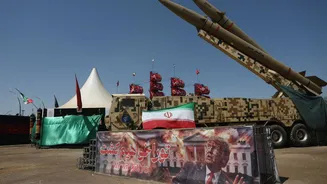









Hostilities between the US and Iran have resumed, with American forces striking two Iranian rocket launchers on Larak Island and Iran later claiming a retaliatory
missile and drone attack on US military bases in Jordan. The strikes marked the first US attack on Iran and Tehran's counterstrike in a month and comes amid renewed tensions over the Strait of Hormuz. Capt Tim Hawkins, a spokesman for Central Command, said forces from Iran's Islamic Revolutionary Guard Corps (IRGC) had been observed preparing to launch rockets armed with sea mines from Larak Island into the waters around the strait. The operation appeared limited in scope rather than a return to the large-scale US bombing campaign seen earlier in the conflict. But Iran has vowed to retaliate, raising the prospect of renewed military action by both sides. US forces had cleared mines previously planted by Iran in the strait as of last week, according to Adm Brad Cooper, the head of Central Command.
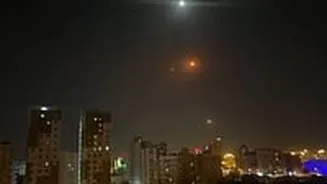
Footage shows an American Patriot air-defense battery intercepting two incoming Iranian medium-range ballistic missiles over Jordan moments ago. pic.twitter.com/ouqanJqAOp
— Breaking911 (@Breaking911) August 30, 2026
The Trump administration has been urging commercial vessels to resume passage through the waterway, with the US Navy guiding ships through the southern part of the strait in Omani waters.
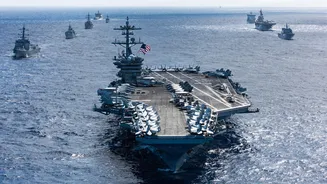
US military officials have said Navy ships, Air Force jets and Army helicopters are monitoring the area and are prepared to strike Iranian forces that threaten commercial shipping.
But passage through the Strait of Hormuz remains dangerous. Two seafarers have been killed in the past two weeks and another is missing. At least 71 attacks on ships have been reported since the start of the war, with 19 sailors killed.
Iran Vows 'More Devastating Responses'
Iran's Islamic Revolutionary Guard Corps said the US attack on Larak Island would be met with retaliation. The IRGC said the strike "will be responded to with punishment on the aggressor", according to Iran's state broadcaster.
Iranian news agencies later reported that the IRGC had launched a combined missile and drone operation against US military bases in Jordan in retaliation for the Larak Island strike.
The IRGC called the operation "Punishment of the Aggressor" and said it targeted the King Hussein and Al Azraq bases.
It claimed the strikes "destroyed the technical and repair infrastructure, as well as the enemy fighter deployment sites", causing significant damage.
"Aggression and crimes will not solve the enemy's desperation in attempting to weaken the Islamic Republic's control over the Strait of Hormuz, and every attack will be met with even more devastating responses," the statement said.
Iranian news agency Tasnim also reported that two people were killed in the US strike on Larak Island, although the claim could not immediately be independently confirmed. The Pentagon did not immediately respond to requests for comment.
Strait of Hormuz Remains at Centre of Tensions
Separately, a tanker was struck by an unknown projectile while travelling inbound through the Strait of Hormuz, according to the UK Maritime Trade Operations (UKMTO). The incident happened about 12 nautical miles north of Khasab, Oman. It was reported late on 29 August, with UKMTO issuing a warning on 30 August.
Iran has struck several vessels over the past month as the US military has sought to maintain commercial shipping through the waterway, including vessels using the Omani route.
The latest escalation follows the collapse of an agreement between Iran and the US to reopen the Strait of Hormuz. The two countries signed a deal in June, after which more than 60 ships a day passed through the waterway for three days. The agreement subsequently broke down and US forces reimposed a blockade on Iranian ports.
Iran has also sought to assert greater control over the strait by creating a system to charge ships for passage, which had previously been free.
The disruption has forced many shipping companies to avoid the waterway. Saudi Arabia, the region's biggest oil producer, has shifted more crude exports towards the Red Sea.
The US strike on Sunday was the first acknowledged by the Pentagon against Iran since 29 July, when Central Command said it had struck dozens of targets inside Iran, including command centres, missile and drone facilities and coastal surveillance sites.
The larger-scale bombing campaigns by both sides have since given way to a pause in military operations, while the Trump administration has instead focused on imposing new economic sanctions on the Iranian government.