






The surprise exit of HDFC Bank non-executive Chairman Atanu Chakraborty, citing concerns over “certain happenings and practices” at the bank, has left
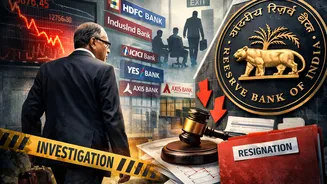
many questions unanswered even after the bank management came forward with clarifications. After the surprise exit of Chakraborty, the stock market responded with panic selling of the HDFC Bank stocks. At open on Thursday, HDFC Bank's share price opened 8.7 per cent down as the development made investors jittery about management stability wiping out over Rs 1 lakh crore in investor wealth in few hours. The Reserve Bank of India (RBI) later sought to calm markets, stating it had not found any material supervisory concerns. But this is not the only resignation that has left the banking ecosystem in a state of shock, but in the last couple of years, a string of high-profile and controversial resignations of bank chiefs in India, spanning ethical concerns, accounting lapses and regulatory disagreements, has sharpened the spotlight on corporate governance standards in the country’s financial sector. IndusInd Bank CEO Resignation: The development follows the 2025 resignation of Sumant Kathpalia, managing director and CEO of IndusInd Bank, after discrepancies in derivatives accounting came to light. The issue impacted the bank’s financials and later drew regulatory attention, with broader questions raised over internal controls and disclosure standards. The issue had a tangible financial impact, denting earnings and raising questions over the robustness of internal risk controls. The controversy deepened as regulators, including the Securities and Exchange Board of India (SEBI), examined possible lapses, with subsequent actions amplifying concerns around governance and disclosure practices in private sector banks. The famous Chanda Kochhar case: These recent developments are part of a broader pattern that has unfolded over the past decade. One of the most prominent cases remains that of Chanda Kochhar, who resigned as chief executive of ICICI Bank in 2018 amid allegations of a conflict of interest in loan approvals linked to the Videocon Group. In this case, leadership exits have often coincided with deeper structural or governance-related issues. The case, which later led to multiple investigations, marked a watershed moment in India’s banking sector, prompting tighter scrutiny of executive decision-making and board oversight. Crisis at Yes Bank: The most dramatic case was the crisis at Yes Bank in 2020. The crisis saw Yes Bank's founder Rana Kapoor exit amid mounting bad loans, governance failures and liquidity stress. Reserve Bank of India (RBI) had to step in with a reconstruction plan backed by a consortium of lenders. The episode not only exposed vulnerabilities in aggressive growth models but also underscored the systemic risks posed by governance breakdowns in large financial institutions. CEO of Axis Bank: In the same year, Shikha Sharma stepped down as CEO of Axis Bank after the RBI flagged significant divergence in the bank’s reporting of non-performing assets (NPAs). The episode highlighted regulatory concerns over asset quality recognition and reinforced the central bank’s push for stricter compliance and transparency norms. A common cause seen in these recurring patterns range from ethical concerns and accounting lapses to asset quality issues. This highlights the increasing role of regulators in enforcing transparency and accountability in the banking system. These are often signals of deeper governance or risk issues, and the swift regulatory intervention in recent cases has helped contain systemic risks.