






International mediators have presented Iran with a proposal for a 10-day ceasefire aimed at reviving an interim understanding between Tehran and Washington,
as diplomatic efforts intensify to halt nearly five months of fighting that has destabilised the Middle East and threatened global shipping through the Strait of Hormuz. According to a senior Iranian official who spoke to Reuters, Tehran has received the proposal as part of a broader diplomatic initiative intended to salvage the interim agreement and create space for negotiations on a longer-term settlement to the conflict, which began on February 28. While Iranian officials acknowledged receiving fresh proposals from mediators, they did not disclose details of the framework or identify the countries involved in the negotiations.
Tehran Signals Diplomatic Channels Remain Open
Iran's Foreign Ministry confirmed that mediators had recently delivered new proposals to Tehran, indicating that indirect diplomatic contacts between the two sides remain active despite continuing military operations. Although officials declined to elaborate on the contents of the proposal, the reported 10-day truce is understood to be designed as a confidence-building measure that could allow both sides to resume negotiations over a broader political settlement.
The proposed pause in hostilities would also seek to reduce tensions across the Gulf region, where repeated attacks on commercial shipping have raised concerns over global energy supplies. The latest diplomatic initiative comes amid continued efforts by regional governments to prevent the conflict from expanding further across the Middle East.
Pakistan Re-Enters Mediation Efforts
Separately, two Pakistani government sources told Reuters that Iranian Interior Minister Eskandar Momeni requested Islamabad to resume its role as a mediator during his second visit to Pakistan in less than a week.
According to the sources, Momeni conveyed Tehran's interest in reactivating Pakistan's diplomatic channel with Washington as military operations continue across the region.
Pakistan previously played a key role in facilitating contacts between the United States and Iran before hostilities escalated again in recent weeks. The renewed outreach highlights Islamabad's continuing importance as a regional interlocutor capable of maintaining communication with both Tehran and Washington during periods of heightened tension.
Fighting Continues Despite Diplomatic Push
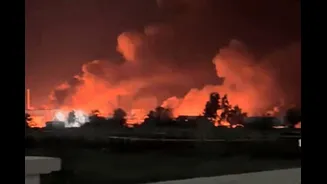
The ceasefire proposal emerged even as military operations continued across multiple fronts. Overnight, the United States carried out another wave of strikes targeting locations across Iran, while Tehran responded with attacks on US military assets in the region through the Islamic Revolutionary Guard Corps (IRGC).
U.S. Central Command (CENTCOM) said it carried out another round of strikes in Iran at approximately 9 p.m. ET on July 20. U.S. officials said the strikes targeted military command centers, maritime capabilities, missile and drone launch sites, and air defense systems. pic.twitter.com/2cxxrpZpn2
— AZ Intel (@AZ_Intel_) July 21, 2026
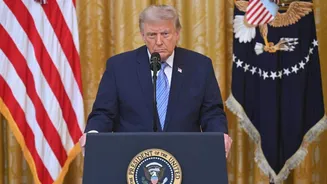
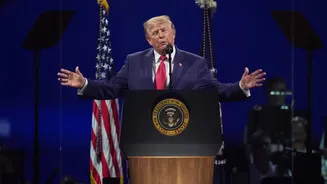
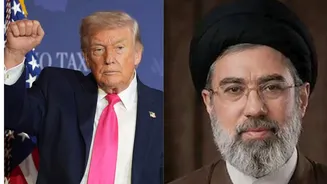
President Donald Trump defended the latest military campaign, saying the strikes were carried out in response to recent Iranian attacks that resulted in the deaths of up to three American service members. Washington has maintained that its operations are intended to degrade Iran's military capabilities and protect international shipping in the Strait of Hormuz.
US Central Command (CENTCOM) also confirmed that it had completed its ninth consecutive night of strikes, saying the operations targeted Iranian military infrastructure linked to threats against commercial vessels navigating the strategic waterway.
Strait Of Hormuz Remains Flashpoint
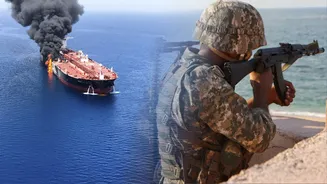
The diplomatic initiative comes against the backdrop of growing instability in the Strait of Hormuz, where multiple maritime incidents have further heightened concerns over freedom of navigation. The IRGC claimed that two oil tankers exploded after attempting to transit what it described as an unsafe route through the Strait. Iranian officials had earlier reported that two vessels were involved in an "accident" in the same area, although it remains unclear whether both statements referred to the same incident.
Separately, the United Kingdom Maritime Trade Operations (UKMTO) reported that a commercial vessel had been struck by an unknown projectile off the coast of Oman. According to UKMTO, the vessel remains adrift but its crew were rescued safely, while investigations into the cause of the strike continue. The series of maritime incidents has reinforced concerns that continued fighting could further disrupt one of the world's most important energy corridors.
Explosions Reported Across Iran
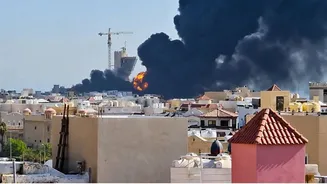
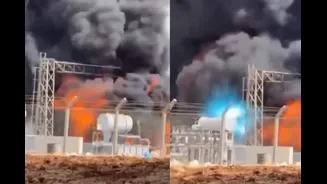
Meanwhile, reports from Iran indicated fresh explosions in several cities, including Tabriz, Chabahar, Konarak, Bandar Mahshahr and Bandar Imam Khomeini. Iranian media reported that one person was killed and several others injured in an explosion southwest of Tabriz, although authorities have not provided further details regarding the incident.
Despite the continuing military exchanges, diplomatic contacts appear to be gaining momentum. Whether the proposed 10-day ceasefire can secure the backing of both Tehran and Washington is expected to determine whether negotiations resume or whether the conflict continues to escalate across the Gulf.