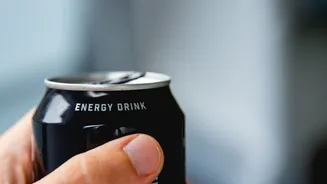




India's food safety regulator is unlikely to grant beverage companies additional time to remove the term "energy drink" from product labels, despite requests
from major global manufacturers for a one-year extension. The development marks the latest flashpoint in an ongoing dispute between the Food Safety and Standards Authority of India (FSSAI) and leading beverage companies, including PepsiCo, Red Bull, Monster Beverage and Mukesh Ambani-led Reliance. The regulator has been tightening enforcement over product labelling practices across the food and beverage sector. In July, the FSSAI directed companies selling high-caffeine beverages to stop using the description "energy drink" or similar terminology within 90 days. The regulator maintained that India has no officially recognised standards for products marketed under that category, making such labelling inconsistent with existing regulations. According to a Reuters report citing industry sources, beverage makers have sought at least a year to comply, arguing that millions of cans and bottles are already in circulation while additional imported packaging materials have already been ordered. However, the regulator appears unwilling to soften its position. A government source told Reuters that FSSAI believes the existing 90-day period is sufficient, as several states have indicated that current inventories can be exhausted within two to three months. "The companies have breached regulations by labelling them energy drinks; they should be happy (India) is not prosecuting them," the government official said in the report. The official further added, “They have not told FSSAI how much inventory is lying in which state, which they are supposed to track to ensure traceability,” the official said. Industry sources, however, told Reuters that calculating stock levels across different states is challenging because of the sheer volume of products in the market. States Intensify Enforcement Drive Apart from seeking more time, beverage manufacturers have also urged the Centre to intervene against enforcement actions initiated by state authorities, Reuters reported. Last month, officials in Rajasthan seized thousands of units of Pepsi's Sting, Reliance's Campa Energy and Red Bull as part of a statewide inspection campaign. Meanwhile, the food safety office in the Union Territory of Ladakh confirmed that similar inspections are underway. “Seizure action is an explicit part of the district-level inspection drive already underway,” said the office, adding that beverages at retailers and distributors were being checked for labelling. Industry executives from PepsiCo, Red Bull and Monster also met Food Processing Minister Chirag Paswan earlier this week to raise concerns regarding the implementation of the labelling directive, according to industry sources cited by Reuters. Following the meeting, Paswan wrote on X that the ministry is committed to promoting "investment, innovation, and job creation" in the food processing sector, without commenting specifically on the labelling dispute. India’s Fast-Growing Energy Drink Market Faces Regulatory Scrutiny The regulatory action comes as India's energy drink market continues to expand rapidly. Globally, such beverages have drawn increasing attention from health regulators because of their caffeine, sugar and taurine content. England has announced that it will prohibit the sale of energy drinks to children under the age of 16 beginning next year. According to Euromonitor data cited by Reuters, retail sales of energy drinks in India are increasing at an annual rate of 12.6 per cent, outpacing growth in both the United States and China. Sales nearly doubled between 2018 and 2023, reaching 907 million litres last year—equivalent to more than three billion bottles and cans. The category witnessed significant momentum after Pepsi introduced Sting in 2017. Its Rs 20 plastic bottle gained widespread popularity, particularly among consumers aged 15 to 19 years and in rural markets, helping drive the segment's rapid expansion across the country. (With agency inputs)