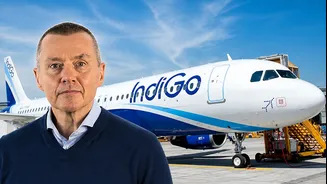








Chief Executive Officer (CEO) of IndiGo Willie Walsh has called for lower airport charges and taxes in India, arguing that high airport costs are putting
pressure on airlines and could constrain the sector's growth potential. Walsh said airport charges were already too high and urged airport operators to offer more competitive pricing, particularly as airlines look to expand their operations in the country. "I haven't changed my view. Airport charges are too high. We would do much better if we had lower taxes. So lower taxes, lower airport charges. That's the way forward. The charging regime at airports had seen a 4% increase in the second quarter of this year, adding that airlines were seeking better value from airport operators," he said. Walsh also highlighted the need for greater cost competitiveness, particularly given the significant expansion opportunities in India's aviation market. "Airports, which effectively operate as monopolies, should be more competitive in their pricing. I had held discussions with Arun Bansal, CEO for Adani Airport Holdings Ltd (AAHL) and hoped to maintain regular dialogue to address the industry's cost-related concerns," he added. IndiGo not hedging fuel requirements: On fuel hedging, Walsh said IndiGo was not currently hedging its fuel requirements and was not planning to do so until it completed a comprehensive review of its policy. He said hedging was primarily a risk-management tool rather than a bet on future fuel prices. He added that major Asian airlines typically hedge around 40% of their fuel requirements, while European carriers hedge between 70% and 80%. IndiGo's international expansion could provide an opportunity to reassess its hedging strategy, he said. West Asia War, ATF Prices remain tension: On the impact of geopolitical tensions and airspace restrictions, Walsh said the closure of Pakistani airspace had created challenges for Indian carriers, forcing airlines to modify their networks. "The aviation industry was facing an unprecedented level of geopolitical disruption, although its resilience and operational flexibility would help airlines navigate the situation." The ongoing Middle East situation has also affected flight operations. Walsh said IndiGo had reduced services by around 30 flights a day, primarily due to the situation in Saudi Arabia. The airline, he added, would resume services only when it was safe to do so. Meanwhile, elevated aviation turbine fuel (ATF) prices continue to pose a significant challenge for airlines. Walsh said the sharp increase in jet fuel prices was being driven largely by an unusually high crack spread — the difference between crude oil prices and jet fuel prices. "While the historical average crack spread between 2000 and 2025 was around 22%, it has climbed to approximately 65%," Walsh said. He attributed the increase to disruptions in global jet fuel refining capacity, particularly in Europe, where production has been scaled back amid reduced supplies from the Middle East. He noted that India was a net exporter of jet fuel and that the supply disruption was largely concentrated in global refining markets. Walsh expressed optimism that the crack spread would eventually moderate as refining capacity and production rebalance, bringing some relief to airlines.