







What is the story about?
Oil is still trading above $100 a barrel, even though crude shipments from the Middle East have nearly returned to the levels seen before the U.S. attacked
Iran. Prices are about 40% higher than when the conflict began, and the cost is spreading through the global economy. The war caused one of the biggest supply disruptions in history. Flows from the region have now almost recovered, as per a report from Bloomberg, yet prices have barely moved. Even Friday's G7 announcement, which promised up to 100 million barrels of emergency oil and diesel, failed to pull them down. There are five problems that are working together.
1. Fear that the war will flare up again
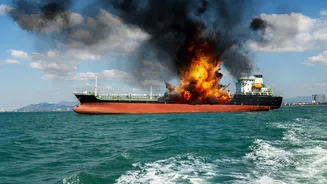
The U.S. and Iran remain far apart on what it would take to end the fighting. They have not gone back to the full-scale combat of the spring, but they have exchanged blows at times. Traders are also watching the U.S. send another aircraft carrier and more troops to the Persian Gulf.Last month, a drone attack shut down Saudi Arabia's East-West Pipeline, a reminder of how fragile supply routes are. Both Iran and the U.S. are trying to control traffic through the Strait of Hormuz, which carried 20% of the world's oil before the war. In Yemen, the Iran-backed Houthis have also announced a blockade of Saudi shipping in the Red Sea through the Bab el-Mandeb Strait, putting another route at risk.
2. Getting oil to market costs more
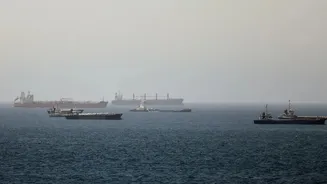
Some tankers are getting through, but the broken traffic patterns have pushed up shipping bills. Oil leaving Hormuz often depends on shuttle trips across the strait, transfers from one ship to another, and unusual routes. Carrying crude from the Persian Gulf to China now costs a record of more than $1.2 million a day in tanker rates, a cost that eventually reaches consumers.3. Stockpiles are running low
Shipments from the Middle East are rising, but the world's reserves took a heavy blow. According to consulting firm Energy Aspects, global inventories stand near 4.3 billion barrels. That is over 400 million barrels lower than in March, the first full month of the war, and Bloomberg says it is the lowest level in five years.Demand has bounced back too. It fell at first because of high prices, but it has since climbed to about 104.8 million barrels a day, up 6.5 million from the wartime low in May, Energy Aspects data cited in the report shows.
4. A shortage of finished fuels
More crude doesn't automatically mean more diesel. The Middle East and Russia are two of the biggest refining centers, and both are still sending out less fuel than normal. Russia's war with Ukraine has blocked exports from many of its refineries.To make up the difference, refiners elsewhere are working flat out. That raises the risk of unplanned shutdowns if their stretched equipment fails. They are also willing to pay almost any price to secure the crude they need.