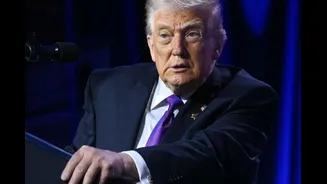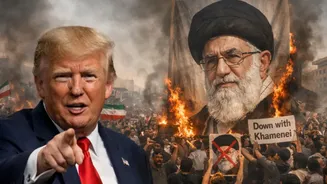

US President Donald Trump is keeping "all of his options on the table" on Iran as the White House weighs how to respond to the regime's violent crackdown
on nationwide protests, the White House said on Friday. The US has also claimed that Iran halted 800 planned executions following pressure from Trump, as Washington warns that military action remains an option. “The president understands today that 800 executions that were scheduled and supposed to take place yesterday were halted,” White House Press Secretary Karoline Leavitt told reporters on Thursday. “All options remain on the table for the president,” she said, adding that Trump had warned Iran of “grave consequences” if the killing of demonstrators continued. Leavitt added that Trump had been informed that planned executions in Iran would stop, and that “we have seen 800 people, their lives have been spared as a result of that.” The White House also said that "President Donald Trump is closely monitoring the situation on the ground in Iran," as quoted by Reuters. Asked how close the president was to launching strikes and whether Gulf states had dissuaded him, White House Press Secretary Karoline Leavitt dismissed what she called speculative reporting based on anonymous sources. “The truth is only President Trump knows what he’s going to do and a very, very small team of advisers are read into his thinking on that,” Leavitt told reporters. Also Read: Why An ‘Unstable’ Iran Is a Geopolitical Test India Did Not Want
US imposes new round of sanctions
The US is also imposing a new round of sanctions against Iranian officials accused of repressing nationwide protests that challenge Iran's theocratic government. Included in Thursday's sanctions is the secretary of the Supreme Council for National Security, whom the Treasury Department accuses of being one of the first officials to call for violence against Iranian protesters.
Included in Thursday's sanctions is the secretary of the Supreme Council for National Security, whom the Treasury Department accuses of being one of the first officials to call for violence against Iranian protesters. The Treasury Department's Office of Foreign Assets Control also designated 18 people and companies.
The demonstrations in Iran began on December 28 over the collapse of the Iranian rial currency, as the country's economy has been squeezed by international sanctions levied in part over its nuclear program.
(With agency inputs)