







What is the story about?
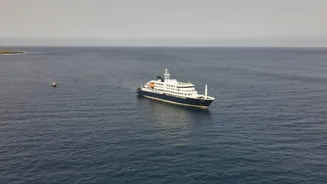
Health officials are conducting contact tracing after a hantavirus outbreak on a cruise ship resulted in three fatalities. The outbreak, which has raised
concerns about potential spread, has prompted officials from multiple countries to identify and monitor individuals who may have come into contact with affected passengers. Hantaviruses are primarily transmitted through exposure to contaminated rodent droppings, making human-to-human transmission rare. However, the Andes virus involved in this incident may have limited transmissibility between people, necessitating thorough investigation and precautionary measures.
Understanding Contact Tracing
Contact tracing aims to inform individuals who might have been exposed to the virus, monitor their health for symptoms, and prevent further transmission. The challenge lies in the social nature of people, as many interact with others in crowded spaces and travel frequently.In this outbreak, fewer than a dozen individuals have exhibited symptoms, with only five confirmed cases reported. However, health officials believe that many others may have been exposed during the cruise.
Status of Passengers
Currently, approximately 140 passengers remain on the cruise ship as it travels to the Canary Islands, and none have reported illness. Authorities are working to reach out to dozens of individuals who disembarked the ship shortly after a passenger's death, prior to identifying the hantavirus as the cause. These individuals hail from at least 12 countries, including several U.S. states such as Arizona, California, Georgia, and Texas.International Response
In St. Helena, where some passengers disembarked, local authorities are monitoring a small number of higher-risk contacts who are advised to isolate for 45 days. British health officials reported that two passengers who returned home are self-isolating without symptoms, while a few contacts of theirs are also under observation.Singaporean authorities are monitoring two men who traveled from St. Helena to South Africa and then to Singapore, both of whom are undergoing testing for hantavirus and are isolated at the National Center for Infectious Diseases.
The U.S. government has provided limited information regarding its contact tracing efforts. In Texas, health officials have confirmed contact with two individuals who left the ship on April 24; both reported no symptoms and stated they had no contact with anyone ill during the cruise. They have committed to monitoring their health daily.
Arizona officials are also tracking a person who disembarked, although the exact date of their return to Arizona remains unclear. Monitoring commenced on May 5, and will continue for 42 days. Additionally, two Canadians who returned to Ontario have been advised to self-isolate.
Scientific Investigation of the Andes Virus
In parallel with contact tracing efforts, scientists are intensifying research into the Andes virus, a member of the hantavirus family found in South America. Initial cases are believed to have originated from a birdwatching trip in Ushuaia, Argentina.The Argentine Health Ministry plans to send a team to Ushuaia in the coming days to further investigate the outbreak. Researchers are examining the virus's genetic makeup to determine if mutations have occurred that could enhance its transmissibility.
Dr. Jeanne Marrazzo, CEO of the Infectious Diseases Society of America, noted that while infected individuals are most contagious during symptomatic phases, the virus may spread through small droplets expelled during talking, coughing, or sneezing.