





'Rebel' Trinamool Congress MP Kakoli Ghosh Dastidar has claimed that nearly 20 party MPs are ready to support the Bharatiya Janata Party (BJP), as internal
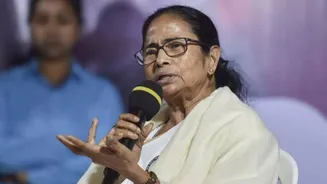
rebellion in the Mamata Banerjee’s party is splitting out in public. Kakoli Ghosh Dastidar said that he, along with 20 MPs, has decided to write to the Lok Sabha Speaker Om Birla and formally convey their desire to be part of the NDA. Kakoli Ghosh Dastidar further said that this decision comes after extensive discussions among fellow MPs. The rebel MP, who was reportedly upset with Mamata Banerjee after she was removed from the post of Whip, claimed that as of now, "I remain the Chief Whip of the TMC in the Lok Sabha, and in that capacity, I have consulted colleagues before arriving at this decision."
"My removal was arbitrary and unilateral. The party chairperson may have announced my replacement from the post, but that does not alter the constitutional and parliamentary position overnight," Kakoli Ghosh Dastidar said.
In another statement, Kakoli said, "... Things have been getting from bad to worse, and I have been with Mamata Banerjee for 40 years... It is useless to say that just because she is not in power in West Bengal, I have left. It is not that... In the last 3-4 years, the pressure was too much on the government officers to work according to the whims and fancies of certain leadership... We want to work for the development of the state and for the national interest and the safety and security of the nation. That is why we want to work separately."
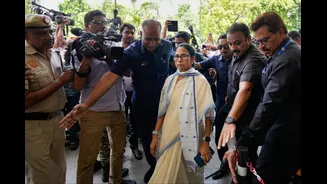
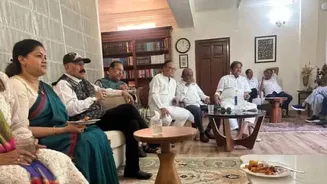
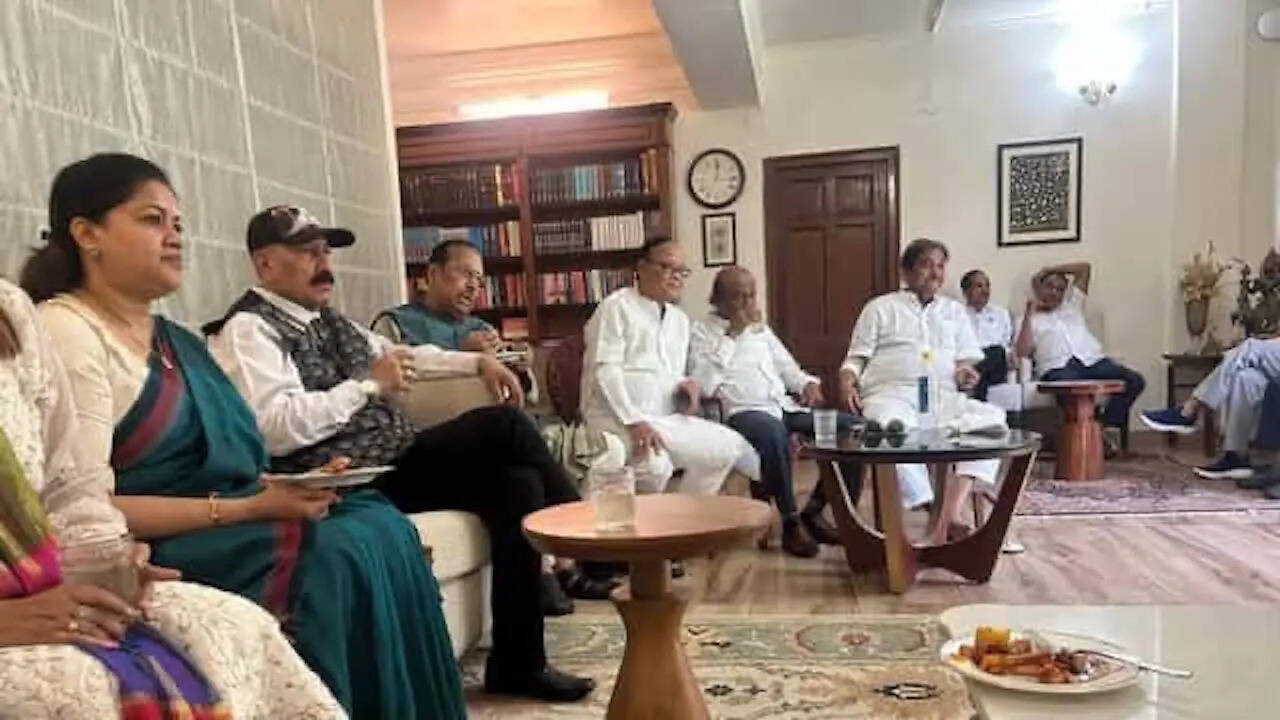
This development has come after reports surfaced that more than 20 TMC rebel MPs met BJP leaders in Delhi even as their party supremo Mamata Banerjee was attending INDIA bloc meeting in the national capital. The TMC faced internal rebellion after drubbing in the recently concluded West Bengal assembly elections, when it lost badly to the BJP.
Mamata Losing Grip on Both - Legislative And Parliamentary Party
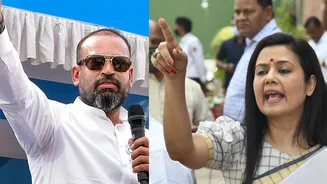
The development has also come barely days after the TMC leadership suffered a setback in the West Bengal Assembly, where 58 of its 80 MLAs defied the party high command's decision to appoint veteran leader Sovandeb Chattopadhyay as the Leader of the Opposition, and elected expelled MLA Ritabrata Banerjee to that post.
Meanwhile, Ghosh Dastidar said the MPs had informed the Speaker of their decision to support the NDA.
"Nearly twenty TMC MPs, including me, have decided to write to Lok Sabha Speaker Om Birla and formally support the NDA," she said.
Sources said the dissident MPs intend to argue before the Speaker that Ghosh Dastidar continues to be the valid chief whip of the party in the Lok Sabha and that any subsequent changes announced by the party leadership were not completed through the required parliamentary procedure.
Mamata Banerjee-led TMC had decided to remove Ghosh Dastidar as chief whip and replace her with Kalyan Banerjee, but that was not communicated to the Lok Sabha secretariat, another rebel TMC MP told PTI.
Claiming that she continues to be the party's chief whip in the Lok Sabha, Ghosh Dastidar said the decision was taken after consultations among fellow parliamentarians.
"We have accepted the people's verdict and believe that our future political course should be aligned with the NDA," she said.
According to sources in the dissident camp, the MPs have chosen not to immediately resign from the TMC or join the BJP.
Instead, they intend to function as a separate parliamentary bloc while supporting the NDA, a strategy designed to ensure protection under the anti-defection law.
How Many TMC MPs in Lok Sabha
The arithmetic is politically significant. The TMC currently has 28 Lok Sabha MPs, with one vacancy following the death of Basirhat MP Haji Nurul Islam. The support of 20 MPs would comfortably cross the two-thirds threshold required for protection under the anti-defection law.
The development came a day after dissident MPs held a closed-door meeting in New Delhi and is likely to intensify questions over the authority of the TMC leadership over its elected representatives.
For Mamata Banerjee, the crisis has now moved beyond organisational dissent to the prospect of losing control over a substantial section of the party's parliamentary strength, with potentially far-reaching consequences for both the TMC and the opposition bloc at the national level.