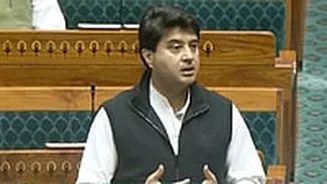









At the ET NOW Global Business Summit 2026, Union Minister Jyotiraditya Scindia described India’s digital transformation as a structural shift that has
laid the groundwork for economic scale, global influence and technological leadership. Framing the past decade as a turning point, Scindia said India is now positioned to convert what was once a “digital divide” into a “digital dividend.” Here are five key takeaways from his address: 1. A Digital Highway Powering The Economy Scindia said India has built an “invisible digital highway” that now underpins commerce, governance and business activity. Broadband subscribers have surged from about 60 million a decade ago to nearly 1 billion today. Meanwhile, the cost of 1 GB of data has dropped from Rs 287 roughly 12 years ago to about Rs 9 — around 5% of the global average. Globally, data costs approximately $2.49 per GB, compared to roughly 11 cents in India. He described this sharp reduction as a “complete transformation,” calling low-cost data a foundational enabler of economic growth. 2. India’s Dominance In Digital Payments India now accounts for nearly 50% of global digital transactions, Scindia said. The Unified Payments Interface (UPI) processes close to 20 billion transactions per month — roughly 250 billion annually — amounting to about $4.3 trillion in value. According to the minister, India’s digital payments infrastructure is not only powering domestic growth but also influencing global commerce, with digital connectivity extending to 190 countries. 3. From Catch-Up To Capability In Telecom Reflecting on India’s telecom evolution, Scindia said the country once lagged in 4G but has since built indigenous capability. A consortium comprising C-DOT, Tejas Networks and Tata Consultancy Services developed a domestic 4G telecom stack in 19 months. In September last year, 100,000 towers built on this indigenous stack were inaugurated, marking India’s emergence as the fifth country capable of producing its own 4G stack. State-run BSNL, he said, chose the difficult route of vertical integration — building its own radio access network, core software and base stations. While India moved alongside the world on 5G, Scindia asserted that the country intends to lead in 6G. 4. Fastest 5G Rollout Globally India has executed what Scindia described as the world’s fastest 5G rollout, deploying nearly 500,000 towers within 22 months. Domestic telecom operators invested about Rs 4.5 lakh crore in capital expenditure. Currently, 99.9% of India’s districts have 5G coverage, with only one district pending due to accessibility constraints. Out of 120 crore mobile subscribers, around 40 crore — roughly 35% — are already on 5G, with projections suggesting this could rise to 100 crore by 2030. 5. India At The 6G Standards Table For the first time, India is actively participating in global standard-setting bodies such as 3GPP and the International Telecommunication Union for 6G development. The Bharat 6G Alliance, launched in 2023, has expanded from 18 to nearly 100 stakeholders across startups, telecom operators, technology firms and government agencies. Its objective is to secure 10% of global patents once 6G standards are finalised. Scindia said India aims to shift from being merely a technology consumer to becoming a standard-setter and global contributor in next-generation telecom. The broader message, he said, is that India’s digital infrastructure — spanning broadband, payments and telecom innovation — has created the foundation for long-term economic transformation. (Experts quoted in this story include: Jyotiraditya Scindia, Minister of Communications of India)