




What is the story about?
The United Arab Emirates confirmed its military response to an Iranian missile attack on Friday, shortly after the United States reported engaging Iranian forces
in the Strait of Hormuz. This incident marks a significant escalation amid ongoing tensions and a fragile ceasefire. The UAE's Defense Ministry reported that three individuals sustained injuries when air defenses intercepted two ballistic missiles and three drones launched by Iran. It remains unclear whether all threats were neutralized, prompting authorities to advise the public to avoid areas with fallen debris.
U.S. Military Actions
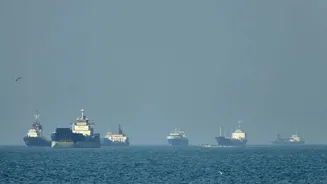
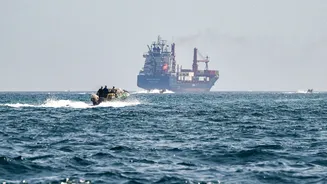
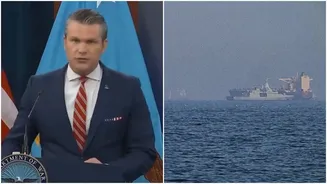
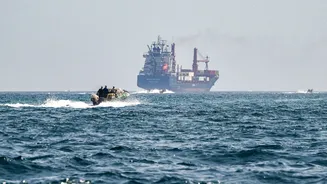
The U.S. military stated it successfully thwarted attacks on three Navy vessels and targeted Iranian military installations in the Strait of Hormuz. The ongoing conflict has severely disrupted this vital maritime route, impacting global energy supplies and leading to increased fuel prices.In a separate incident, U.S. forces disabled two Iranian tankers attempting to breach an American blockade of Iranian ports. This series of confrontations has heightened concerns about regional stability.
Political Reactions
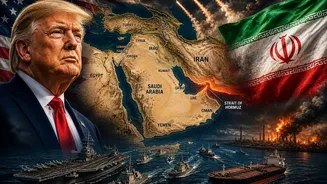
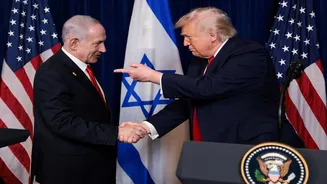
U.S. President Donald Trump downplayed the military exchanges, referring to them as a 'love tap' during a conversation with ABC. He reiterated the U.S. stance of resuming extensive military action if Iran fails to comply with demands regarding the reopening of the strait and its nuclear program.Iran's Foreign Ministry condemned the U.S. actions, labeling them as a 'clear violation' of the existing ceasefire. Tensions continue to escalate as Washington awaits a response from Tehran regarding ongoing negotiations.
Iran's Military Engagement
Iranian state media reported exchanges of fire between Iranian forces and 'the enemy' on Qeshm Island in the Strait of Hormuz. Reports also indicated defensive actions in western Tehran, suggesting heightened military readiness in the region.Iran's Foreign Ministry criticized the U.S. military's actions against Iranian oil tankers and coastal areas, emphasizing the need for diplomatic resolutions to prevent further hostilities.
International Diplomatic Efforts
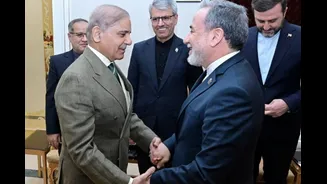
Pakistani Prime Minister Shehbaz Sharif indicated ongoing communications between the U.S. and Iran, aiming to extend the ceasefire and negotiate a peace agreement. Meanwhile, U.S.-Israel talks with Lebanon are set to resume next week in Washington, highlighting the complex diplomatic landscape.The fragile ceasefire between Israel and Hezbollah has faced challenges, including persistent clashes in southern Lebanon, complicating peace efforts in the region.
Environmental Concerns
Recent satellite imagery has revealed an oil slick in the Persian Gulf, reportedly originating from Iran's Kharg Island, raising environmental alarms. Experts warn that continued drifting of the slick could threaten sensitive marine ecosystems in the Gulf.The Pentagon has not confirmed whether it is monitoring the spill or if recent military strikes contributed to the situation, although the spill appears to have occurred prior to the latest U.S. military actions.
U.S. Stance on Iranian Control
U.S. officials have expressed that it is 'unacceptable' for Iran to exert control over the Strait of Hormuz through a new agency that regulates maritime traffic. This development has raised significant concerns among international shipping stakeholders.Rubio emphasized the need for global action against Iran's control over this crucial waterway, questioning the international community's response to this emerging challenge.
Regional Oil Supply Impact
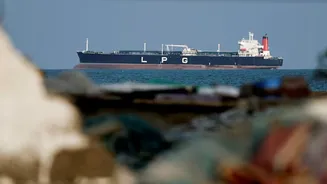
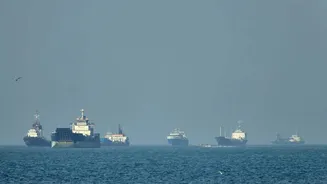
Despite the tensions, China continues to import oil from Iran, even as incidents involving Iranian tankers have occurred. An oil tanker recently navigated through the Strait of Hormuz, highlighting the ongoing complexities in the region's oil supply chain.South Korea remains reliant on oil shipments through the strait, having imported over 60% of its crude from this route last year, underscoring the importance of stability in the region for global energy markets.