







What is the story about?
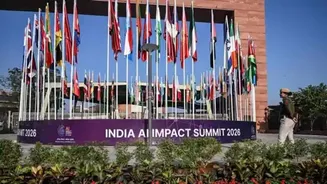
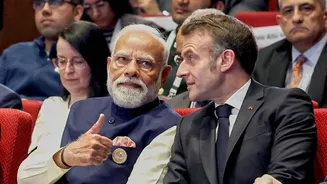
NEW DELHI (AP) — Indian Prime Minister Narendra Modi emphasized India's ambition to become a significant player in the global artificial intelligence (AI)
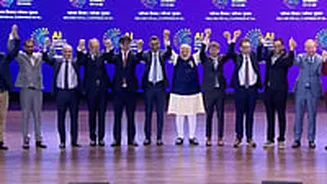
ecosystem during the India AI Impact Summit held on Thursday. He stated that India aims to create technology domestically while making it available worldwide. “Design and develop in India. Deliver to the world. Deliver to humanity,” Modi asserted in front of a diverse audience that included global leaders, technology executives, and policymakers in New Delhi.
India's Positioning in the AI Landscape
Modi's address highlighted India's potential as a rapidly growing digital market that seeks to utilize its extensive experience in establishing large-scale digital public infrastructure. He positioned India as a cost-effective hub for AI innovation, particularly beneficial for developing nations.“We must democratize AI. It must become a tool for inclusion and empowerment, particularly for the Global South,” Modi stated, underlining the importance of equitable access to AI technologies.
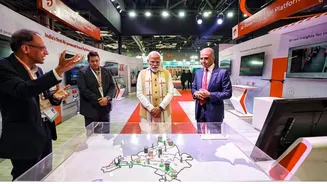
Additionally, Modi engaged with technology leaders who presented their investment plans for India. OpenAI CEO Sam Altman announced a collaboration with Tata Group to advance AI initiatives, including the establishment of data center infrastructure in India.
“We believe the democratization of AI is the only fair and safe path forward,” Altman remarked during the discussions.
With nearly 1 billion internet users, India has emerged as a vital market for global tech firms aiming to expand their AI ventures. Microsoft recently declared a $17.5 billion investment over four years to enhance cloud and AI infrastructure in the country, following a $15 billion investment from Google that includes plans for its inaugural AI hub in India. Amazon has also committed $35 billion by 2030, focusing on AI-driven digitization.
India is actively pursuing up to $200 billion in investments for data centers in the coming years. However, challenges remain, as the country has yet to develop its own large-scale AI model comparable to those of U.S.-based OpenAI or China's DeepSeek, hindered by limited access to advanced semiconductor chips, data centers, and the multilingual landscape.
Challenges Faced at the Summit
The summit encountered organizational issues, with attendees and exhibitors reporting long wait times and delays. Some individuals expressed concerns on social media regarding theft of personal belongings and display items, although organizers later confirmed that the items were recovered.Further complications arose when a private Indian university was expelled from the summit after a staff member presented a commercially available Chinese-made robotic dog, falsely claiming it as an original innovation of the institution.
Additionally, Microsoft co-founder Bill Gates withdrew from a planned keynote address without providing a specific reason. The Gates Foundation indicated that the decision was made to ensure the focus remained on the summit's primary objectives, amid ongoing scrutiny regarding Gates' past associations.