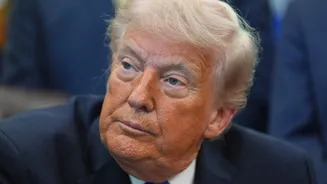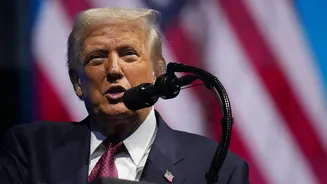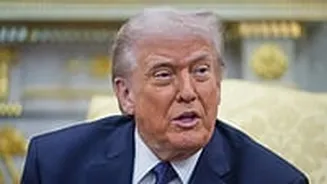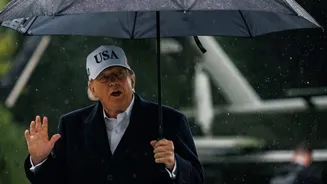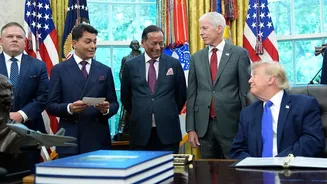



US President Donald Trump on Monday unveiled plans for a $15bn steel complex in Iowa that will be developed by Mesabi Metallics, a company owned by India's
Essar Group. Trump announced the project at the White House alongside executives from Mesabi Metallics, describing it as a major investment in US manufacturing. The White House has called the proposed facility the largest steel plant in US history. Essar Group, the Indian multinational conglomerate that owns Mesabi Metallics, is investing a total of $18bn in the US, Trump said. Mesabi Metallics chairman Rewant Ruia thanked the President for supporting efforts to expand manufacturing in the country. "Thank you, US President Donald Trump, for bringing back the importance of building things in America... With the new steel complex in Iowa, we will complete the fully integrated American supply chain," Ruia said. Trump described the Iowa project as "a tremendous investment" and said: "Our steel industry is roaring back to life."
#WATCH | Washington DC | Mesabi Metallics chairman Rewant Ruia says, "Thank you, US President Donald Trump, for bringing back the importance of building things in America... With the new steel complex in Iowa, we will complete the fully integrated American supply chain, from mine… https://t.co/cJJWyT51qQ pic.twitter.com/uY7wDphhhj
— ANI (@ANI) September 28, 2026
From Minnesota Iron Ore to Iowa Steel
The proposed complex is designed as a fully integrated operation. Mesabi Metallics plans to extract iron ore from its mine in Minnesota and transport it to Iowa, where it will be processed into steel.
The first phase of the Iowa plant is expected to produce 7.5 million tonnes of steel a year, with production potentially rising to 10 million tonnes annually.
Steel production is expected to begin in 2030.
The project will be connected to Mesabi Metallics' new iron ore mine in Nashwauk, Minnesota. The company has already invested more than $2.5bn in developing the mine.
Trump described the Minnesota operation as the first new iron ore mine in the US in more than five decades. "It's the first new iron ore mine in the United States in more than 50 years," he said.
The mine is located in Minnesota's Mesabi Iron Range, which stretches for roughly 80 to 100 miles and accounted for about 60% of total US iron ore production during the 20th century, according to the US Geological Survey.
The mine is expected to produce about 7.5 million tonnes of iron a year and create around 350 jobs in Minnesota.
India's Essar Expands US Investment
The Iowa project would significantly expand Essar Group's presence in the US steel and mining industry. The company already has a major investment in its Minnesota mining operation. The new plans would link the mine directly to a large-scale steelmaking facility in Iowa.
Earlier this month, a federal agency said it would provide up to $10bn in financing for the project. Export-Import Bank chairman John Jovanovic has also visited the Minnesota mine.
The Iowa plant is expected to create at least 1,750 permanent jobs once it is operational. Its first phase could support a further 5,000 to 6,000 construction jobs, according to a White House official.
The White House estimates the project could generate about $95bn in economic impact during construction and its first 10 years of operation. The planned operation would therefore create a supply chain stretching from iron ore extraction in Minnesota to steel production in Iowa.
Why Iowa?
The decision to build the steel plant in Iowa, despite the iron ore being mined in Minnesota, has raised questions about the choice of location. The two states are hundreds of miles apart, with the Minnesota mine about 250 miles from Iowa's northern border.
Electricity costs could be one factor. Power is a major expense for steelmakers, and commercial electricity prices in Iowa are marginally lower than in Minnesota.
The Iowa location also puts the proposed plant closer to major markets and industrial customers in the central US, although the company has not publicly detailed all the reasons behind its choice.
Trump's Steel Tariff Strategy
The announcement forms part of Trump's wider push to revive US manufacturing. Steel has been a major focus of his trade policy. During his first term, Trump imposed a 25% tariff on most imported steel, measures that were largely retained by his successor, Joe Biden.
Trump has since raised tariffs on most imported steel to 50%. He said the higher tariffs were encouraging companies to invest in US manufacturing rather than pay duties on imported steel.
"Soon after my inauguration, I imposed powerful 50 per cent tariffs on all foreign steel, and now our steel industry is roaring back to life," Trump said. "Everyone's building their plant here because they don't want to pay tariffs."
The policy has received support from parts of the US steel industry, which has urged the administration to maintain the tariffs as companies invest in domestic production.
In a letter to Trump last week, steel industry groups urged him to "stand firm against efforts to weaken the tariffs".