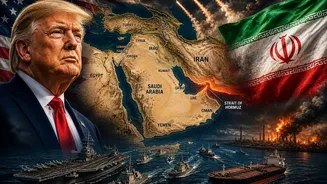




Nobody can quite agree on whether this is peace or war. The Americans say ceasefire. The Iranians say they have not even started yet. And somewhere in
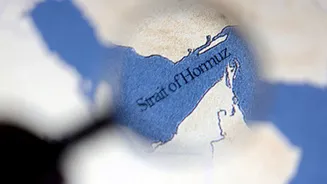
the Strait of Hormuz — through which a fifth of the world's oil and gas ordinarily flows without incident — the answer is playing out in real time, one missile strike at a time. The fragile ceasefire between the United States and Iran showed new signs of strain on Tuesday amid reports of fresh Iranian missile attacks and continuing naval confrontations in the Strait of Hormuz. Even as President Donald Trump and senior American officials maintained that the truce remained intact, events across the region suggested a precarious situation. Late on Tuesday, President Trump also announced a temporary stop to the US operations in the Strait of Hormuz, dubbed "Project Freedom". "Based on the request of Pakistan and other Countries, the tremendous Military Success that we have had during the Campaign against the Country of Iran and, additionally, the fact that Great Progress has been made toward a Complete and Final Agreement with Representatives of Iran, we have mutually agreed that, while the Blockade will remain in full force and effect, Project Freedom (The Movement of Ships through the Strait of Hormuz) will be paused for a short period of time to see whether or not the Agreement can be finalized and signed," Trump wrote on Truth Social.
Ceasefire Tested by Strikes Across Middle East
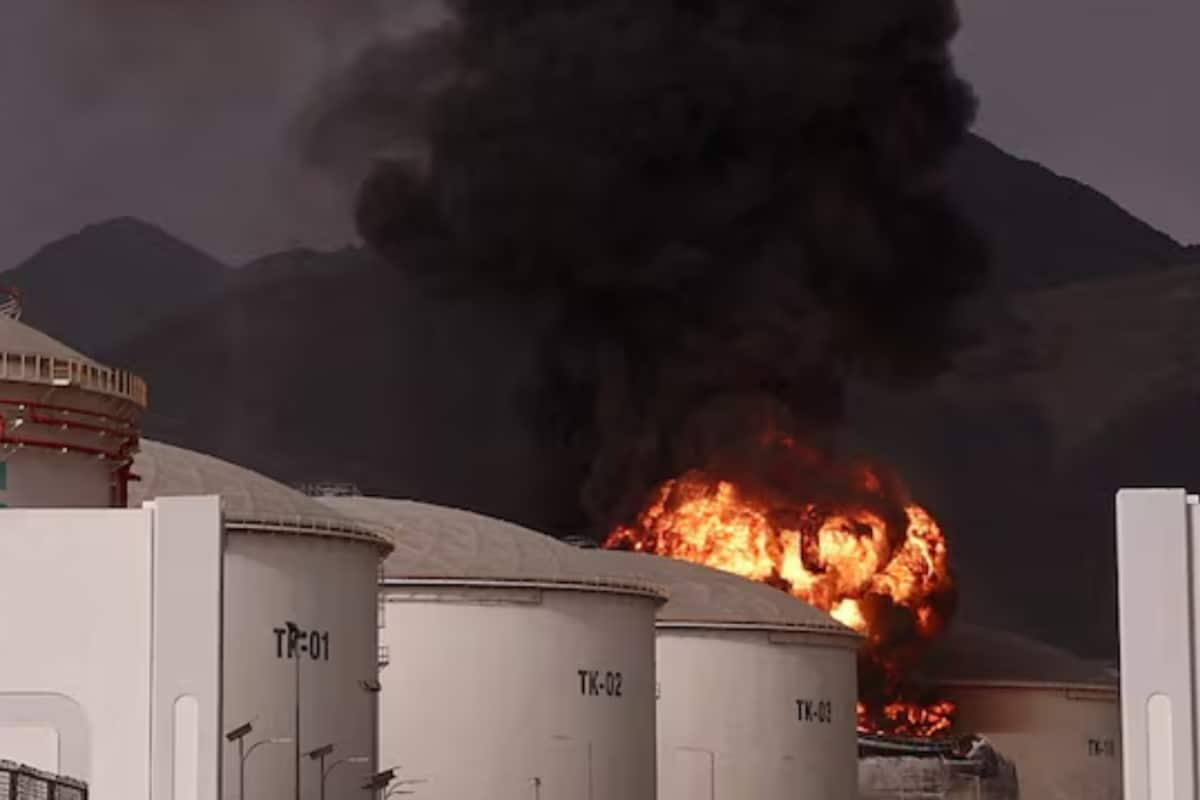
The latest tensions were fueled by reports that Iran had launched a new barrage of missiles toward the United Arab Emirates, marking the second such attack in 48 hours. Authorities said their air defense systems were intercepting incoming threats, though it remained unclear whether any caused damage.
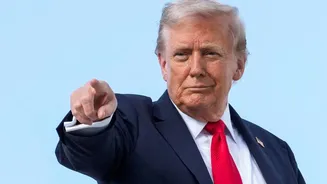
The strikes came as American naval forces pressed ahead with efforts to reopen the Strait of Hormuz. Despite the escalation, Trump struck a confident tone, describing the situation as firmly under American control. "We have a situation where we have total control. As you know, the blockade's been amazing; it's like a piece of steel. Nobody's going to challenge the blockade, and I think it's working out very well," he said.
Even as Trump downplayed the violence, US officials acknowledged that Iranian forces had fired on American ships multiple times since the ceasefire began on April 8. Trump characterised those incidents as minor and declined to define what would constitute a breach of the truce.
Competing Claims Over Strait of Hormuz
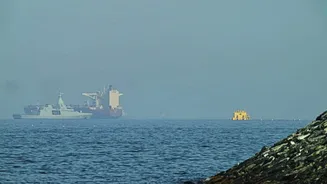
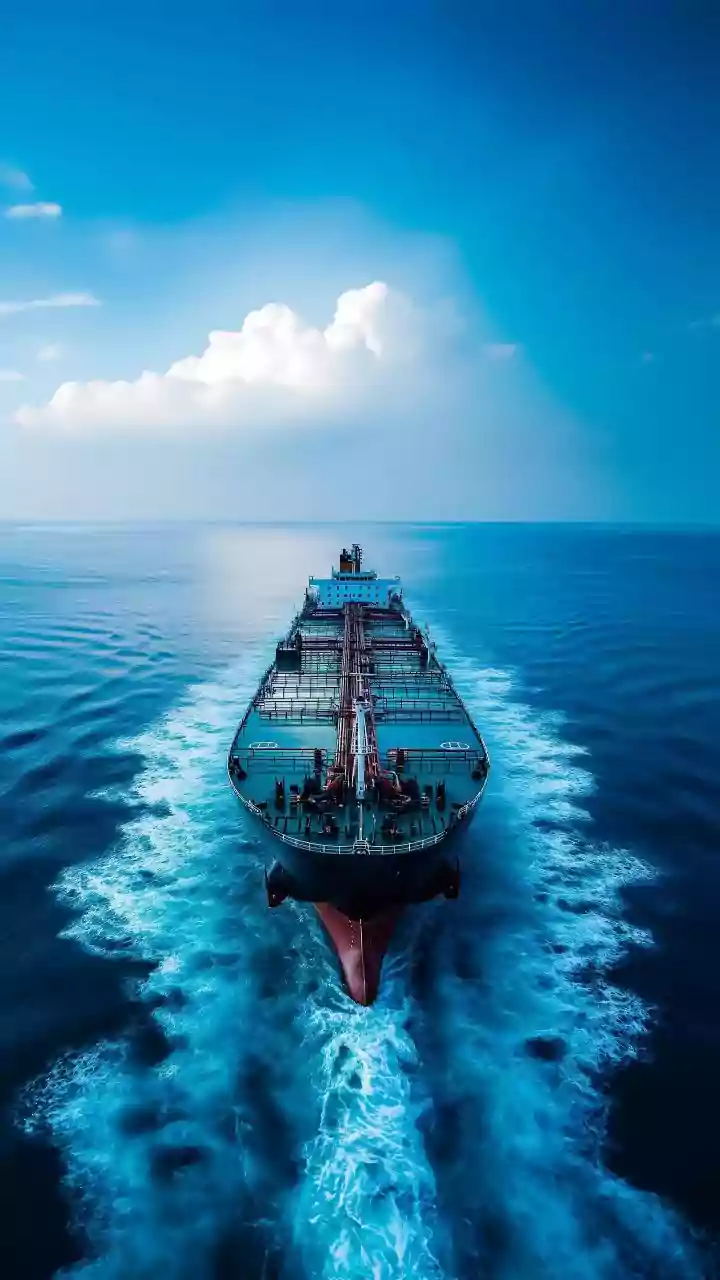
At the center of the standoff is the Strait of Hormuz, through which roughly a fifth of the world's oil and liquefied gas flows. Since the outbreak of hostilities, traffic has come to a near standstill.
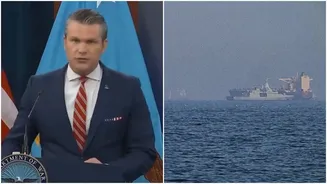
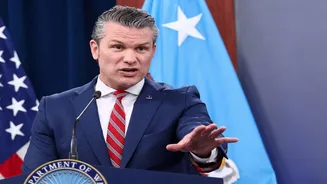
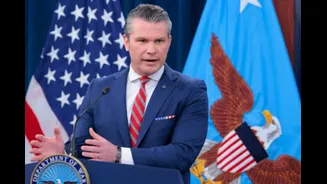
Defense Secretary Pete Hegseth said the United States had secured control of the passage. "We're ensuring that we have control of that strait, which we do," he said, adding that the operation was temporary and defensive in nature. "We're not looking for a fight."
But Iranian officials and state media have rejected those assertions, claiming instead that Tehran's grip over the waterway has "intensified." Conflicting narratives have left the true balance of control uncertain, even as both sides seek to project strength.
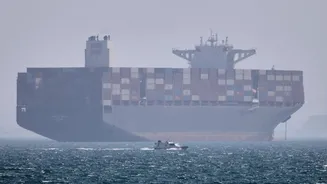
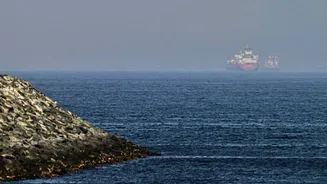
A cargo ship in the Gulf was also struck by a suspected land-attack cruise missile, injuring several crew members, according to two US officials. The vessel, identified as the CGM San Antonio and owned by a French company, was hit late on Tuesday local time, the officials told CBS News. Since Sunday, three other cases involving commercial vessels, including a fire on board one ship, a separate projectile strike, and an alleged attack by small craft have been reported.
Before the conflict, around 130 vessels a day passed through the strait. In recent days, only a handful have attempted the journey — two under US protection on Monday, with none confirmed on Tuesday.
What the US Plans Next
American officials have repeatedly framed their military posture as defensive. The United States Central Command said on Monday that its forces had shot down cruise missiles and drones it said were targeting US vessels, and destroyed six Iranian speedboats.
Secretary of State Marco Rubio described the broader effort as necessary to safeguard global commerce, warning that ships stranded in the region faced worsening conditions. "These ships, you know, you don't leave a ship out there for this long. You start running out of food. You start running out of potable water, essential supplies, and they're at the mercy of this piracy," he said.
Rubio added that nations not directly involved in the conflict were being drawn into its consequences, with many urging Washington to restore safe passage. "So already, many nations, privately and some publicly, have asked the United States to help free their ships and to restore freedom of navigation in the straits of Hormuz and this critical artery of global trade," he said.
He also accused Iran of attempting to normalize its control over the waterway. "They're trying to make this some new normal," he said. "Under no circumstances can we ever allow them to normalize the fact that they get to blow up commercial ships and put mines in the water."
What's Happening on the Ground
While both sides have avoided declaring the ceasefire broken, military activity has continued at a steady pace. General Dan Caine, chairman of the Joint Chiefs of Staff, said Iran had carried out 10 attacks on US forces since the truce took effect. He described those actions as "below the threshold" that would trigger a return to major combat operations.
General Caine also accused Iran of using the strait as leverage over the global economy. Tehran, he said, had "weaponised the global supply chain" and attempted to "hold the entire global economy hostage."
On the Iranian side, senior officials have issued defiant statements. Mohammad Bagher Ghalibaf, the speaker of Iran's parliament, suggested that the United States was under greater strain from the ongoing standoff. "We know well that the continuation of the current situation is unbearable for the United States, while we have not even begun yet," he said.
The Impact of the Standoff
The standoff has had far-reaching economic consequences. The near closure of the Strait of Hormuz has disrupted global energy markets, driving up fuel prices and placing pressure on economies worldwide.
More than 800 ships and roughly 20,000 crew members are believed to be stranded west of the narrow waterway, according to officials, highlighting the scale of the disruption.
Iran has threatened to deploy mines, drones, missiles and fast-attack craft to deter passage through the strait, while the United States has responded with a blockade of Iranian ports. The result is a maritime stalemate, with each side seeking to impose costs on the other without escalating into a broader war.
What Happens Next
Efforts to move beyond the ceasefire toward a more durable settlement have made little progress. US and Iranian officials held one round of face-to-face talks in Islamabad last month, mediated by Pakistan, but further negotiations have stalled. A senior Pakistani official told The New York Times that "backdoor diplomacy" was continuing and that gaps had narrowed on several issues, though no breakthrough has been announced.
Iran has proposed a 14-point peace plan, reportedly focused on lifting blockades and establishing a new mechanism to manage the strait. The United States has conveyed its response, but details remain undisclosed.
Iranian Foreign Minister Abbas Araghchi said negotiations were progressing, while warning that the United States and its allies risk being drawn into a "quagmire."
For now, the ceasefire appears to be holding — but only just. The continued exchanges of fire, competing claims of control and lack of progress in negotiations all point to a fragile arrangement that could unravel quickly.