







Canada has successfully recruited 48 senior academics from American universities to relocate north of the border. The move is being seen as an early sign
that Trump administration pressure on elite US institutions is pushing top researchers to look elsewhere. The 48 scholars are part of a larger group of 64 academics recruited from around the world through Canada's Global Impact+ Research Talent Initiative, a C$1.7 billion program. Many of the recruits work in fields that have seen funding cuts under the Trump administration, including sustainability, climate science and environmental research. Canada's industry minister, Mélanie Joly, framed the recruitment wave as proof of the country's approach to global instability. "When people ask how Canada is responding to a changing world, point them to this moment," Joly said in a statement to the Financial Times. "Point them to the researchers who have chosen Canada."
Timing Coincides With Rocky US-Canada Relations
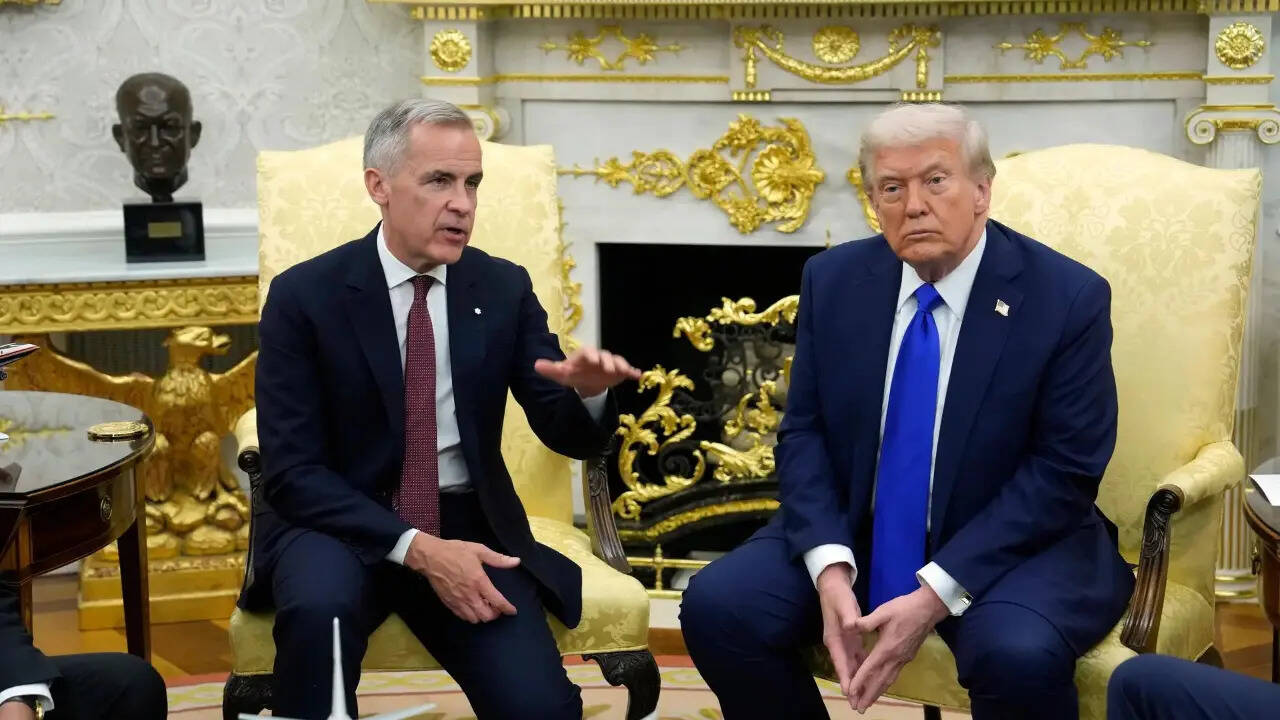
The announcement lands at a tense moment between the two countries. Trade talks between Washington and Ottawa collapsed last week, triggering a wave of retaliatory tariffs on both sides of the border, further straining ties between the neighbors.Big Names From Big Schools
Among those joining Canadian universities are professors from Harvard, MIT, Carnegie Mellon and Berkeley. The initiative was launched by Prime Minister Mark Carney's government at the end of last year and has since triggered broader talks aimed at drawing academic talent from across the globe.While most of the recruited academics are currently based in the US, the group also includes researchers from the UK, China, France, Germany, India and Australia. Some are Canadian citizens returning home, while others hold Chinese or dual nationality.
Notable recruits include MIT astronomer Sara Seager, RNA biology specialist Phillip Zamore of the University of Massachusetts, and Brian Kuhlman of UNC Chapel Hill, known for his work in computational protein design.
Why Researchers Are Looking Elsewhere
The recruitment surge comes as the Trump administration has tightened its grip on higher education during his second term, including funding cuts, increased political oversight of grants and university governance, and tighter restrictions on international student visas.Ethan Zuckerman, who is leaving the University of Massachusetts to take a research chair at McGill University in Montreal, pointed to the political climate as a driving factor.
"Canada's willingness to support research that challenges commercial and political threats to democracy is deeply necessary at a moment where authoritarianism is on the rise around the globe," Zuckerman said.
Part of a Larger Pattern
This wave of departures follows other high-profile exits from American universities in recent months. Historians Timothy Snyder and Jason Stanley left Yale for the University of Toronto, while Nobel Prize-winning MIT economists Esther Duflo and Abhijit Banerjee are relocating to the University of Zurich.Several European countries have rolled out extra funding to attract researchers leaving the US, but none have matched the scale or success of Canada's program so far.