







What is the story about?
Israel's military announced on Friday that it executed a series of strikes targeting locations in Tehran, coinciding with visible smoke rising from the
Beirut skyline. This development comes as U.S. President Donald Trump postponed a deadline concerning Iran's energy infrastructure, related to the ongoing closure of the Strait of Hormuz. The Israeli military has deployed thousands of troops into Lebanon, aiming to secure control over the territory south of the Litani River, approximately 20 miles (30 kilometers) from the border, according to Israeli officials.
U.S. Diplomatic Maneuvers
In response to a turbulent stock market, President Trump extended the deadline for reopening the Strait of Hormuz to April 6. He stated that Iran requested this extension and described ongoing negotiations as progressing positively, despite Iran's public denial of negotiations regarding a 15-point proposal aimed at resolving the conflict.Impact of the Ongoing Conflict
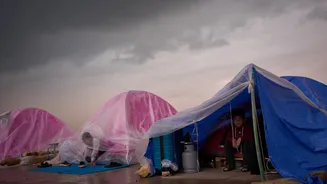
The conflict has resulted in significant casualties, with over 1,900 fatalities reported in Iran and nearly 1,100 in Lebanon. Israel has seen 18 deaths, including three soldiers killed in Lebanon. Additionally, 13 U.S. military personnel have lost their lives, along with numerous civilians affected in the Gulf region. The ongoing violence has displaced millions in both Lebanon and Iran.New Zealand's Response to Fuel Shortages
In a separate development, New Zealand's Finance Minister Nicola Willis introduced a four-tier plan to address potential fuel shortages arising from the conflict. The plan includes restrictions on gasoline purchases, prioritizing fuel for essential services during severe shortages.Willis explained the criteria guiding the transition between levels, which include domestic fuel stock assessments and export restrictions. Currently, New Zealand operates at phase one, the lowest level, with no active restrictions on gasoline use or purchasing.