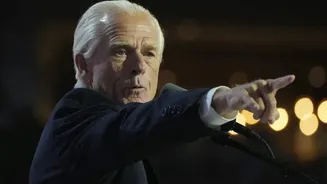

Peter Navarro, President Donald Trump's top trade enforcer, unleashed a new broadside against India, zeroing in on artificial intelligence as the latest
flashpoint in bilateral friction. In an interview with former White House strategist Steve Bannon on Real America's Voice, Navarro demanded to know why US taxpayers effectively subsidize AI platforms servicing millions abroad. "Why are Americans paying for AI in India? ChatGPT operates on US soil and uses American electricity, servicing large users of ChatGPT in India and China and elsewhere around the world," he stated bluntly. The comments, now viral, underscore Navarro's long-standing push for America First policies amid stalled trade negotiations. This outburst lands amid heightened US-India trade deadlock, triggered by Trump's imposition of 50% tariffs on New Delhi for persistent Russian oil purchases. US senators recently urged Trump to prioritize a deal, citing India's pulse tariffs in retaliation, according to reports from India Today. Navarro framed AI as another resource drain, echoing his broader crusade against perceived imbalances where American innovation fuels foreign gains without fair reciprocity. Navarro did not elaborate on specific data behind user volumes or energy costs. Critics quickly dismissed the rhetoric as protectionist hyperbole, noting AI firms like OpenAI operate globally by design. Still, the advisor tied it to wider economic threats, warning of food inflation from foreign farmland buys at inflated prices—ten times market value in some cases.
Navarro's Track Record Fuels Fire
Navarro's history with India runs deep and contentious, marked by a string of provocative barbs. He once dubbed New Delhi the "maharaja of tariffs," slamming its manufacturing policies as unfair to US exporters. In 2025, he escalated by accusing India of laundering Russian crude—"blood money"—to fund Ukraine war efforts, per India Today coverage.
The advisor went further, labeling the conflict "Modi's war" and invoking a "Brahmin" analogy for Indian negotiators, which drew swift rebuke. India's Ministry of External Affairs rejected those remarks as "inaccurate and misleading," with spokesperson Randhir Jaiswal stressing they erode mutual respect. "Such characterisations do not reflect the depth of the India-US relationship," Jaiswal affirmed in a September 2025 statement.
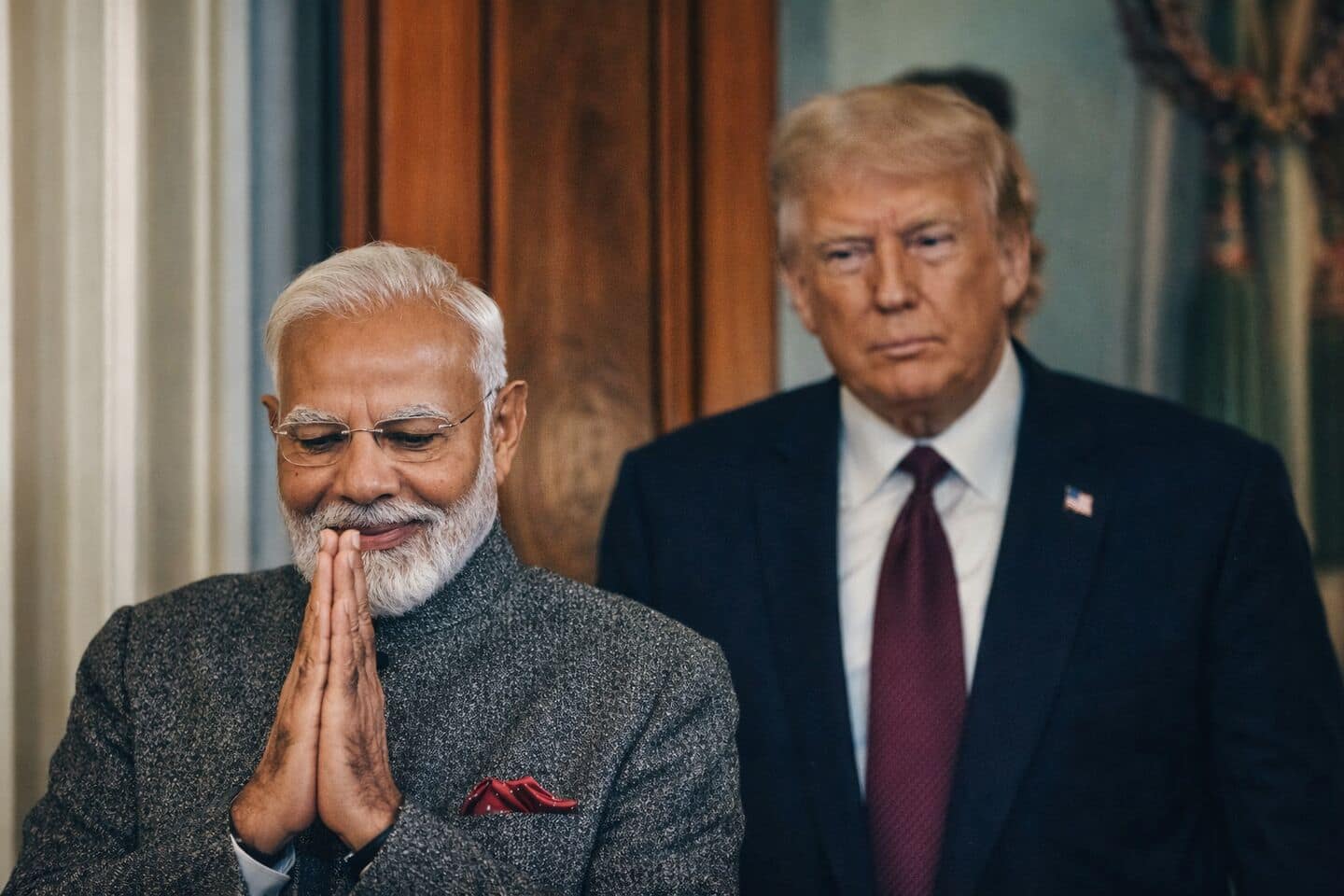
Trump's team has leaned on Navarro's bombast to pressure partners, but allies worry it poisons deal-making. Sources close to trade talks say PM Narendra Modi has not directly engaged Trump recently, per Howard Lutnick's bombshell revelation.
India counters that its oil buys stabilize global energy markets amid sanctions. US officials privately acknowledge New Delhi's strategic autonomy, yet Navarro's rhetoric keeps tensions simmering. As 2026 trade deadlines loom, his AI salvo signals no letup.
The bigger picture reveals stalled bilateral progress despite high-level optics. Trump hailed India as a counterweight to China post-reelection, but Navarro's attacks highlight unresolved hurdles like digital taxes and market access. A comprehensive deal remains elusive, with pulses and steel tariffs as fresh irritants.