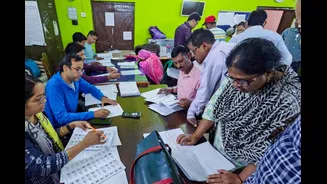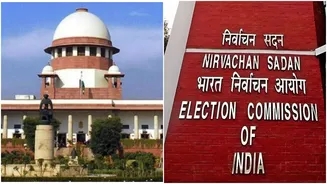







New Delhi: The Supreme Court on Tuesday granted petitioners 10 days to respond to the Election Commission’s affidavit defending the Special Intensive Revision
(SIR) of electoral rolls. In the affidavit, the poll panel maintained that the exercise was legally authorised and the relevant orders had been unanimously approved by all three members. The apex court listed the joint plea by 12 Opposition parties challenging the functioning of the ECI for a detailed hearing on November 17, 2026. A bench comprising Chief Justice of India (CJI) Surya Kant and Justices Joymalya Bagchi and V Mohana also issued notices to the poll panel and others on a fresh plea filed by Rajya Sabha MP Dola Sen. In her plea, Sen alleged that changes were made to Form 6 during the Bihar SIR without the approval of the top court. The SC bench granted the poll panel two weeks to file a supplementary affidavit. Senior advocate and MP Maneka Guruswamy, appearing for Sen, argued that the Election Commission had incorrectly claimed that the changes made to Form 6 had been approved by the Supreme Court. The matter was tagged with other pending pleas and listed for hearing on November 17.
What Did EC Say In Its Affidavit Filed On Monday?
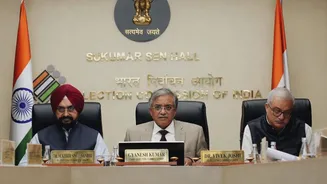
Chief Election Commissioner Gyanesh Kumar and Election Commissioners Sukhbir Singh Sandhu and Vivek Joshi filed a joint affidavit before the top court.
The affidavit was filed in response to petitions challenging the CEC’s functioning and changes to SIR-related forms. The Commission said the affidavit had been approved unanimously by the CEC and both Election Commissioners and maintained that all three SIR orders — issued in June 2025, October 2025 and May 2026 — were unanimous decisions.
The affidavit came amid reports and allegations of differences within the three-member poll panel over the manner in which the SIR exercise has been implemented.
The poll body said differences in observations, suggestions or queries during the movement of a file could not be construed as dissent within the Commission. “In any decision-making process, suggestions, observations, varying views are common and cannot be seen as dissent,” the Commission said in its affidavit.
It explained that files ordinarily move sequentially through the Election Commissioners before reaching the CEC. In urgent matters, approvals can be obtained electronically and subsequently recorded on the file.
According to the joint affidavit, the poll panel questioned the basis of the petitions before the Supreme Court, arguing that they had been built largely around newspaper reports. On allegations surrounding Form 6, the ECI clarified that the form had not been amended and that only the Centre had the power to amend it. The Commission said the SIR declaration was a separate document and should not be treated as an amendment to Form 6.