








What is the story about?
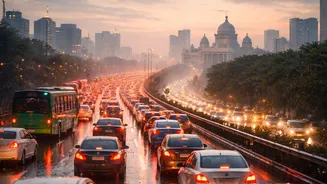
Bengaluru Traffic: Bengaluru’s traffic nightmare has officially gone global. India’s Silicon Valley has emerged as the second most congested city in the world
in 2025, ranking just behind Mexico City, according to the latest TomTom Traffic Index, an annual report tracking global traffic trends and commuting behaviour. The findings come at a time when the Karnataka government is projecting Bengaluru on international platforms as the “city of the future” — but residents stuck in endless jams may disagree. Bengaluru has been climbing the congestion ladder rapidly — it was the 6th most congested city in 2023, rose to 3rd in 2024, and has now surged to 2nd place in 2025.
Bengaluru’s Rush Hour Speed Drops Further
The report highlights that travel during peak hours has become slower and more exhausting:
- Average rush-hour speed (2025): 13.9 kmph
- This is 1 kmph slower than 2024
In simple terms, the city is crawling — and it is getting worse.
10 km in Bengaluru Now Takes Over 36 Minutes
Even a basic commute has become a time drain.
- Time taken to travel 10 km (2025): 36 minutes 9 seconds
- This is 2 minutes 4 seconds more than 2024
The congestion level — measured as additional time motorists lose due to traffic — stands at:
- 74.4% in 2025
- 1.7% higher than 2024
So, How Much Time Are Bengalureans Losing Every Year?
Here’s the most painful figure from the TomTom report:
Time lost annually during rush hour: 168 hours per year
This refers to the average time spent doing a 10 km trip twice a day during peak hours on working days.
What 168 hours means in real life
- 168 hours = 10,080 minutes
- 168 hours = 7 full days
- That’s essentially an entire week every year lost inside traffic, just during peak-hour commutes.
Worst Day of 2025: May 17
TomTom also flagged Bengaluru’s worst traffic day in 2025:- Date: May 17 (Saturday)
- Congestion level hit: 101%
- In the evening peak hour, motorists took 15 minutes to cover just 2.5 km
The reasons behind the day’s extreme traffic included:
- Rain
- Tree falls
- Broken infrastructure
Dublin Next After Bengaluru; Pune and Mumbai Also in Global Top-20
Bengaluru was followed by Dublin (Ireland) on the list of the world’s most congested cities.
Other Indian cities in the global top-20 include:
- Pune — 5th most congested city
- Mumbai — 18th
In comparison:
- Pune average speed: 18 kmph
- Mumbai average speed: 20.8 kmph
Even though both cities face chronic congestion, they still move faster than Bengaluru.
Why Bengaluru Is Performing So Poorly
Senior police officers cited multiple structural and long-term problems behind Bengaluru’s worsening congestion, including:
- Rapidly rising vehicular population
- No major expansion of existing roads
- Stagnant road network
- Stalled or delayed infrastructure projects
With more vehicles entering the city every year and road capacity remaining largely the same, traffic has turned into a daily slow-motion crisis.
Bengaluru’s global brand as a tech capital may be thriving — but on the roads, the city is choking. With residents losing 168 hours (7 full days) annually, the TomTom report makes one thing clear: Bengaluru’s traffic is no longer just a civic issue — it’s a quality-of-life emergency.