







What is the story about?
Daily commuters travelling between Namo Bharat and the Delhi Metro at New Ashok Nagar can now expect a faster and smoother journey, with authorities rolling
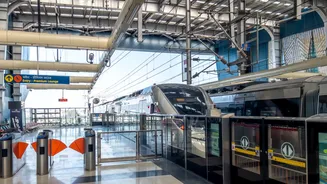
out a single-point security check at the interchange. The new system means passengers will no longer need to undergo separate security screenings while switching between the Namo Bharat station and the Blue Line Metro station at New Ashok Nagar. According to the National Capital Region Transport Corporation (NCRTC), the facility has been made possible through an operational interchange footbridge and a newly created security checkpoint at Gate No. 2 of the Metro station. Also Read | Fewer Stops, Higher Frequency: How RRTS is Different from Delhi Metro
What Changes for Commuters
- Metro passengers heading towards Meerut on Namo Bharat will not be frisked again after reaching the Namo Bharat station
- Namo Bharat commuters travelling towards Noida via the Delhi Metro will also skip a second security check
- This is expected to cut interchange time significantly, especially during peak hours
- The NCRTC said removing repeated screening will help save time for daily office-goers, students, and long-distance travellers who rely on the high-speed corridor.
Faster Delhi–Meerut Travel
Officials said the move supports the under-one-hour Delhi–Meerut travel time promised by Namo Bharat, making interchanges quicker and hassle-free.
The corporation has also operationalised a dedicated footbridge at Ghaziabad’s Namo Bharat station, connecting it directly with the Shaheed Sthal New Bus Adda Metro station. Travelators will be added in the future to handle heavy commuter footfall.
The single-point security check is part of a broader push towards seamless end-to-end travel, following the launch of integrated QR ticketing that allows passengers to book Metro and Namo Bharat tickets through either mobile app.
For thousands of commuters switching daily between Metro and Namo Bharat, the update means less waiting, less walking, and a quicker ride home.
(With Inputs from PTI)