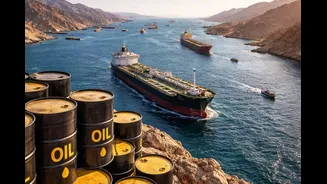








Oil Price Today, March 31: Oil prices jumped sharply on Tuesday as the ongoing war in the Middle East raised concerns about global supply shortages. Brent
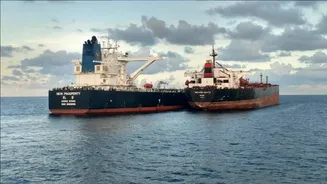
crude crossed $110 per barrel, rising $2.26 (around 2%) to $115.04 in early trade. US West Texas Intermediate (WTI) crude also surged by $3.10 (about 3%) to $105.96 per barrel. Both benchmarks are now at their highest levels in weeks. This month alone, oil prices have seen a massive rally. Brent crude has risen nearly 59%, while WTI is up about 58% - the biggest monthly gain since May 2020, according to Reuters. Also Read - Strait Of Hormuz To Remain Closed? Trump May End Iran War Without Reopening Key Waterway: Report The main reason behind this surge is disruption in key global oil supply routes. Iran has effectively blocked the Strait of Hormuz, one of the world’s most important oil transit points, through which nearly 20% of global oil supply passes. Tensions increased further after Kuwait Petroleum Corp said its fully loaded tanker Al Salmi, which can carry up to 2 million barrels of oil, was hit in an Iranian attack at Dubai port. Authorities have also warned about possible oil spills, adding to supply worries. The situation has become more serious after Yemen’s Iran-backed Houthi forces launched missile attacks targeting Israel. This has raised fears of disruption at the Bab el-Mandeb Strait, another key route that connects the Red Sea to global shipping lanes. Experts say problems at both these routes could severely impact global oil supply. “If the Houthis successfully resume a blockade of the Bab al-Mandab Strait, both of the world's most critical energy arteries would be under simultaneous pressure. This 'twin chokepoint' crisis is a nightmare scenario for global supply chains,” said Tim Waterer, chief market analyst at KCM Trade. To deal with the situation, Saudi Arabia has started rerouting a large part of its oil exports through the Red Sea. Data from Kpler shows shipments to the Red Sea port of Yanbu jumped to 4.658 million barrels per day last week, compared to about 770,000 barrels per day earlier this year. Meanwhile, US President Donald Trump has warned that the US could target Iran’s oil infrastructure if it does not reopen the Strait of Hormuz. Iran has rejected US peace proposals, calling them unrealistic, even as the White House said talks are still going on. Markets remain nervous as there is no clear solution in sight. “The markets do not see any offramp for the conflict as the two sides are very wide apart in terms of their demands despite the rosy picture that President Trump is painting,” said Edward Meir, an analyst at Marex.