







A parliamentary panel has recommended a unified national regulatory framework for all 65 school education boards operating in India. The initiative aims
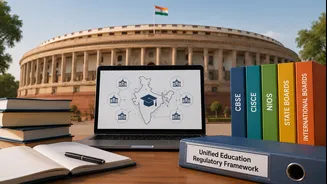
to standardise their functioning, evaluation systems and curriculum in line with the National Education Policy (NEP) 2020. The recommendation was made in the Tenth Report of the Committee on Estimates for 2026-27 on “Budget and Policy aspects for providing Affordable and Quality Education in the Country including Review of Central Board of Secondary Education (CBSE)”. The report was presented in the Lok Sabha on Wednesday, according to a PTI report. According to the committee, India currently has 65 school education boards, divided into regular and open-school boards functioning at the national and state levels. Some of the major national boards include the Central Board of Secondary Education (CBSE), the Council for the Indian School Certificate Examinations (CISCE) and the National Institute of Open Schooling (NIOS). International boards including the International Baccalaureate (IB) and Cambridge Assessment International Education (CAIE) also operate in the country. The panel observed that while boards such as CBSE and CISCE have established quality-control mechanisms, many state and open-schooling systems follow different evaluation methods, curriculum standards and operational practices. The committee also noted that a critical regulatory mechanism governing the establishment and expansion of private education boards is not available. It warned that inadequate oversight could affect the standardisation of secondary education and create differences in students' knowledge and academic preparedness when they compete for admission to universities and professional courses.
Single-Window Clearance for New Boards
To address these concerns, the committee has asked the Ministry of Education to establish a unified regulatory framework covering all 65 education boards.
It has also recommended a strict single-window clearance system before any new private education board is authorised, with the aim of keeping the growth of unauthorised private institutions and boards in check.
In addition, the panel also proposed creating a public digital repository which will contain details of all recognised national, state and international education boards. It will help students and parents verify the recognition status of boards and avoid enrolling with unrecognised institutions.
Further, the committee noted that lack of oversight might create a direct threat to students’ future and the standardisation of secondary education across the country, which will lead to dissimilarity in the students' knowledge who seek to compare university and professional education to secure seats.